
strength training 1

10 Effective Strength Training Exercises for Building Lean Muscle

Are you ready to take your fitness journey to the next level? Building lean muscle not only helps you achieve a toned and sculpted physique, but it also boosts your metabolism and enhances your overall strength and performance. But with so many strength training exercises out there, it can be overwhelming to know where to start. That’s why we’ve done the hard work for you. In this article, we’ve compiled a list of the top 10 effective strength training exercises that will help you build lean muscle and transform your body. From squats and deadlifts to push-ups and lunges, these exercises target multiple muscle groups and are suitable for all fitness levels. Whether you’re a beginner or a seasoned gym-goer, our comprehensive guide will provide you with the knowledge and motivation you need to reach your muscle-building goals. Get ready to challenge yourself, push your limits, and achieve the physique you’ve always desired. Let’s dive in and make building lean muscle easy!   Benefits of strength training for muscle building Strength training is not just for bodybuilders or athletes. It offers a wide range of benefits that can improve your overall health and well-being. When it comes to building lean muscle, strength training is essential. Here are some of the key benefits: 1. Increased muscle mass: Strength training stimulates hypertrophy, the growth and increase in size of muscle cells. This leads to an increase in muscle mass, giving you a more defined and toned appearance. 2. Boosted metabolism: Building lean muscle increases your metabolic rate, meaning you burn more calories even at rest. This can be highly beneficial for weight management and fat loss. 3. Improved strength and performance: Strength training exercises target specific muscle groups, making them stronger and more resilient. This translates to improved performance in other physical activities, such as running, jumping, or lifting heavy objects. 4. Enhanced bone density: Strength training is not only good for your muscles but also for your bones. It helps stimulate bone growth and improves bone density, reducing the risk of osteoporosis and fractures. 5. Better posture and balance: Many strength training exercises focus on core muscles, which are essential for maintaining good posture and balance. By strengthening these muscles, you can improve your overall alignment and reduce the risk of injuries.   The science behind building lean muscle Building lean muscle is not just about lifting weights or doing endless repetitions. It requires a solid understanding of the science behind muscle growth. When you perform strength training exercises, you create micro-tears in your muscle fibres. These tears are then repaired during the recovery process, leading to muscle growth and increased strength. To maximize muscle growth, it’s important to follow these principles: 1. Progressive overload: Your muscles need to be consistently challenged in order to grow. This means gradually increasing the intensity, volume, or resistance of your workouts over time. Aim to push yourself beyond your comfort zone and progressively overload your muscles to stimulate growth. 2. Proper form and technique: Performing exercises with proper form and technique is crucial to target the intended muscles and avoid injuries. Focus on mastering the correct movement patterns before increasing the weight or intensity. 3. Rest and recovery: Rest days are just as important as your training days. During rest, your muscles repair and rebuild, leading to muscle growth. Make sure to incorporate rest days into your training program and prioritize quality sleep for optimal recovery. 10 effective strength training exercises for muscle growth Now that you understand the benefits of strength training and the science behind muscle growth, let’s dive into the top 10 effective strength training exercises that will help you build lean muscle. These exercises target multiple muscle groups and can be modified to suit your fitness level. 1. Squats: Squats are a compound exercise that targets the muscles in your lower body, including your quadriceps, hamstrings, and glutes. Start with bodyweight squats and gradually add weight as you progress. 2. Deadlifts: Deadlifts work your entire posterior chain, including your lower back, glutes, hamstrings, and calves. Focus on maintaining a neutral spine and engage your core throughout the movement. 3. Bench Press: The bench press is a classic exercise that primarily targets your chest muscles, as well as your triceps and shoulders. Start with lighter weights and gradually increase the load as you get stronger. 4. Overhead Press: The overhead press targets your shoulder and upper back muscles. It’s important to maintain proper form and avoid arching your back during the movement. 5. Pull-ups: Pull-ups are a challenging exercise that targets your back, biceps, and shoulders. If you’re unable to do a full pull-up, start with assisted pull-ups or inverted rows and gradually progress to full pull-ups. 6. Push-ups: Push-ups are a great compound exercise that targets your chest, triceps, and shoulders. Start with modified push-ups on your knees and gradually progress to full push-ups. 7. Lunges: Lunges are a unilateral exercise that targets your quadriceps, hamstrings, glutes, and calves. Focus on maintaining proper form and keeping your knees aligned with your toes. 8. Plank: Planks are an isometric exercise that targets your core muscles, including your abs, obliques, and lower back. Start with shorter holds and gradually increase the duration as you get stronger. 9. Russian Twists: Russian twists are a great exercise for targeting your obliques and improving rotational strength. Start with bodyweight twists and gradually add weight or resistance as you progress. 10. Calf Raises: Calf raises target your calf muscles and can be performed using bodyweight, dumbbells, or a calf raise machine. Focus on the full range of motion and squeeze your calf muscles at the top of the movement.   Proper form and technique for each exercise To make the most of your strength training exercises and prevent injuries, it’s crucial to perform each exercise with proper form and technique. Here are some tips for each exercise: 1. Squats: Stand with your feet shoulder-width apart, toes slightly turned out. Lower your hips back and down,

10 Effective Strength Training Exercises for Building Lean Muscle Read More »

benefits of Yoga

Different Types of Yoga: Your Comprehensive Guide to Wellness and Balance

Different Types of Yoga: Your Comprehensive Guide to Wellness and Balance Explore the different types of yoga and embark on a journey of holistic wellness through this comprehensive guide. With its rich origins in ancient India, yoga provides a multifaceted approach to well-being, intertwining the physical, mental, and spiritual dimensions of life. Whether you’re a beginner or an experienced practitioner, discover the unique benefits each yoga type offers. Roll out your mat, inhale deeply, and let’s navigate through the varied and enriching world of yoga together 1. Hatha Yoga: Aligning Body and Breath At the foundation of all yoga styles, we find Hatha Yoga. This gentle practice focuses on aligning the body and breath, incorporating physical postures (asanas), breathing techniques (pranayama), and meditation. By embracing Hatha Yoga, individuals can enhance their flexibility, build strength, and experience an overall sense of well-being. 2. Vinyasa Yoga: Flowing with Breath and Movement Vinyasa Yoga is a dynamic and flowing style that synchronizes movement with breath. Through graceful transitions between poses, practitioners cultivate strength, endurance, and mindfulness. This yoga style not only improves physical fitness but also helps release mental and emotional tension, leading to increased focus and clarity. 3. Ashtanga Yoga: The Eight-Limbed Path to Discipline Ashtanga Yoga follows the eight-limbed path outlined by the sage Patanjali. This structured and rigorous practice involves a predetermined series of poses combined with synchronized breathing. By practicing Ashtanga Yoga, individuals can enhance physical strength, increase flexibility, and develop discipline and concentration. It offers a transformative journey that nurtures both the body and the mind. 4. Bikram Yoga: Heat-Induced Detoxification Bikram Yoga, also known as hot yoga, takes place in a heated room typically set to 105°F (40.6°C). The practice consists of a specific sequence of 26 postures and two breathing exercises. The heat intensifies the benefits, allowing for deeper stretching and detoxification through sweating. Bikram Yoga promotes cardiovascular health, improves circulation, and aids in weight management. 5. Kundalini Yoga: Awakening the Inner Energy Kundalini Yoga focuses on awakening the dormant spiritual energy within each individual. This practice incorporates physical postures, breathwork, chanting, and meditation to promote self-awareness and spiritual growth. Kundalini Yoga cultivates vitality, reduces stress, and enhances intuition, leading to a balanced and joyful life. 6. Restorative Yoga: Deep Relaxation and Healing Restorative Yoga is a gentle and nurturing practice that promotes deep relaxation and healing. With the support of props like bolsters, blankets, and blocks, practitioners are fully supported in each pose, allowing them to release tension and restore the body’s natural equilibrium. This style of yoga is particularly beneficial for reducing stress, improving sleep quality, and enhancing overall well-being. 7. Yin Yoga: Embracing Stillness and Surrender Yin Yoga is a slow-paced and meditative practice that targets the connective tissues, such as ligaments, tendons, and fascia. Poses are held for an extended period, typically ranging from one to five minutes, allowing for deep stretching and releasing physical and emotional blockages. Yin Yoga cultivates mindfulness, improves flexibility, and stimulates the flow of vital energy throughout the body. Types of Yoga: A Path to Wellness Practicing different types of yoga offers a multitude of benefits for your overall well-being: 1. Physical Well-being: Regular practice of yoga enhances strength, flexibility, and posture. It improves cardiovascular health, aids in weight management, and reduces the risk of chronic diseases. 2. Mental and Emotional Health: Yoga reduces stress, anxiety, and depression. It enhances focus, concentration, and mental clarity, leading to a balanced state of mind. 3. Spiritual Growth: Yoga provides a pathway to self-discovery and spiritual awakening. Through meditation and mindfulness, practitioners develop a deeper connection with their inner selves and the world around them. 4. Increased Energy and Vitality: Yoga stimulates the flow of vital energy (prana) in the body, leaving individuals feeling rejuvenated, energized, and ready to tackle life’s challenges. 5. Improved Sleep Quality: Regular practice of yoga promotes relaxation and reduces insomnia, resulting in improved sleep quality and overall well-restedness. 6. Enhanced Immune Function: Yoga supports the body’s immune system, helping to prevent illness and promote overall well-being. 7. Increased Self-Awareness: Yoga cultivates self-awareness and self-acceptance, allowing individuals to develop a positive relationship with themselves and others. Conclusion: Incorporating different types of yoga into your life can be a transformative journey towards improved physical, mental, and spiritual well-being. Whether you’re seeking strength, flexibility, relaxation, or self-discovery, the diverse world of yoga has something to offer. So, roll out your mat, breathe deeply, and let the magic of yoga guide you towards a path of wellness and self-transformation. Hatha Yoga

Different Types of Yoga: Your Comprehensive Guide to Wellness and Balance Read More »

embrace

Discover the Transformative Benefits of Ashtanga Yoga for Mind, Body, and Soul

Benefits of Ashtanga Yoga for Mind, Body, and Soul Welcome to the world of Ashtanga Yoga, a transformative practice that goes beyond physical exercise to nourish your mind, body, and soul. Whether you are a seasoned yogi or a beginner on your wellness journey, Ashtanga Yoga offers a unique experience that will leave you feeling rejuvenated and balanced. This ancient form of yoga combines breath control, meditation, and a series of dynamic postures to create a holistic approach to well-being. Ashtanga Yoga not only strengthens and tones your muscles but also cultivates mental clarity, emotional stability, and spiritual growth. In this article, we will delve into the incredible benefits that Ashtanga Yoga brings to your life, from improved flexibility and endurance to reduced stress and enhanced self-awareness. Get ready to embark on a transformative journey that will empower you to live your best life, one breath at a time. The Philosophy behind Ashtanga Yoga Ashtanga Yoga is rooted in the philosophy of Patanjali’s Yoga Sutras, which outline the eight limbs of yoga. These limbs serve as a guide for living a meaningful and purposeful life, both on and off the mat. The first two limbs, the Yamas and Niyamas, provide ethical guidelines for personal conduct, while the third limb, Asana, refers to the physical postures practiced in yoga. Ashtanga Yoga emphasizes the fourth limb, Pranayama, which focuses on breath control. By synchronizing breath with movement, Ashtanga Yoga creates a moving meditation that calms the mind and brings a sense of presence to the practice. The remaining limbs, Pratyahara, Dharana, Dhyana, and Samadhi, explore deeper states of meditation and spiritual enlightenment. Physical Benefits of Ashtanga Yoga Ashtanga Yoga is a physically demanding practice that builds strength, flexibility, and endurance. The series of postures, known as the Primary Series, are designed to systematically work every muscle in the body, from the core to the limbs. As you move through the sequence, you will develop long, lean muscles and improve your overall body awareness. Regular practice of Ashtanga Yoga can also increase your cardiovascular fitness, as the dynamic flow of the practice raises your heart rate and stimulates circulation. Additionally, the postures in Ashtanga Yoga help to improve balance, coordination, and posture, resulting in a more aligned and graceful physical presence. Mental Benefits of Ashtanga Yoga Beyond the physical benefits, Ashtanga Yoga has profound effects on the mind and mental well-being. The practice requires focused concentration and presence, which helps to quiet the mind and alleviate stress and anxiety. Through the combination of breath control and movement, Ashtanga Yoga becomes a moving meditation, allowing you to release mental chatter and enter a state of deep relaxation. The rhythmic breathing patterns in Ashtanga Yoga also stimulate the parasympathetic nervous system, promoting a sense of calm and reducing the effects of chronic stress on the body. Regular practice of Ashtanga Yoga can lead to increased mental clarity, improved concentration, and a greater sense of overall mental well-being. Spiritual Benefits of Ashtanga Yoga Ashtanga Yoga is deeply rooted in spirituality and offers a path for self-discovery and spiritual growth. The practice encourages self-reflection and self-inquiry, allowing you to explore your inner landscape and cultivate a deeper connection with yourself. Through the physical postures and breath control, you can tap into your inner strength and resilience, unlocking the potential for personal transformation. Ashtanga Yoga also provides a space for surrender and letting go, allowing you to release attachments and cultivate a sense of detachment from the external world. This sense of detachment opens the door to experiencing a greater connection to something beyond the self, whether it be a higher power, nature, or the universe. Ashtanga Yoga Poses and Sequences The Ashtanga Yoga practice consists of a specific sequence of postures that are performed in a flowing, dynamic manner. The Primary Series, also known as Yoga Chikitsa, translates to “yoga therapy” and is designed to purify the body and prepare it for deeper spiritual practices. The series begins with Sun Salutations, followed by a standing sequence, seated postures, and a closing sequence. Each posture is linked with breath, creating a seamless flow and allowing for a moving meditation. As you progress in your practice, you can move on to the Intermediate and Advanced Series, which add more challenging postures and variations to further deepen your practice. It is important to approach the Ashtanga Yoga practice with patience and respect for your body’s limitations, as the sequences can be physically demanding. The Importance of Breath Control in Ashtanga Yoga Breath control, or Pranayama, is an integral part of the Ashtanga Yoga practice. The breath serves as a bridge between the body and the mind, connecting the physical and the spiritual aspects of the practice. In Ashtanga Yoga, the breath is synchronized with movement, creating a steady and rhythmic flow. The Ujjayi breath, also known as the “victorious breath,” is used throughout the practice to cultivate heat and create a sense of internal focus. By practicing conscious breath control, you can enhance your physical performance, calm the mind, and deepen your connection to the present moment. The breath acts as an anchor, allowing you to stay grounded and centered as you navigate through the challenges and intensity of the practice. How to Incorporate Ashtanga Yoga into Your Daily Routine Incorporating Ashtanga Yoga into your daily routine can be a transformative way to prioritize self-care and enhance your overall well-being. Start by setting aside dedicated time each day for your practice, whether it’s in the morning or evening. Create a quiet and peaceful space where you can roll out your mat and focus on your breath and movement. If you’re new to Ashtanga Yoga, begin with shorter practice sessions and gradually increase the duration as you build strength and stamina. Consistency is key, so aim to practice regularly, even if it’s just for a few minutes each day. As you progress in your practice, you can also explore attending led classes or workshops to deepen your understanding and receive

Discover the Transformative Benefits of Ashtanga Yoga for Mind, Body, and Soul Read More »

Meditation Techniques

The Science-Backed Benefits of Mindfulness: How Being Present Can Transform Your Life

How Being Present Can Transform Your Life Welcome to a journey of self-discovery and transformation. In a world that constantly demands our attention, finding moments of peace and clarity can seem like an impossible task. But what if I told you that the key to unlocking a more fulfilling and meaningful life lies in the simple act of being present? Enter mindfulness – a practice rooted in ancient wisdom and backed by modern science. In this captivating exploration, we will delve into the science-backed benefits of mindfulness and discover how it can profoundly impact our physical and mental well-being. From reducing stress and anxiety to enhancing focus and creativity, mindfulness has the power to reshape our relationship with ourselves and the world around us. So, prepare to embark on a transformative journey as we uncover the secrets of mindfulness and learn how this practice can help us cultivate a deeper sense of joy, peace, and fulfillment in our lives. Let’s embark on this remarkable adventure together! The Science Behind Mindfulness Mindfulness is more than just a passing trend; it is a scientifically proven practice that has gained recognition in the fields of psychology and neuroscience. Research has shown that mindfulness can have a profound impact on our brain’s structure and function. Studies using functional magnetic resonance imaging (fMRI) have revealed that regular mindfulness practice can increase the size of the prefrontal cortex, the region responsible for executive functions such as attention, self-awareness, and emotional regulation. Furthermore, mindfulness has been found to decrease activity in the amygdala, the part of the brain responsible for the fight-or-flight response. This reduction in amygdala activity has been linked to a decrease in stress and anxiety levels. The science behind mindfulness is fascinating, and it provides a strong foundation for understanding the benefits that this practice can offer. Benefits of Mindfulness for Mental Health One of the most significant benefits of mindfulness is its positive impact on mental health. Numerous studies have shown that mindfulness can help reduce symptoms of depression and anxiety. By cultivating present-moment awareness, individuals can gain a greater sense of control over their thoughts and emotions. Mindfulness allows us to observe our thoughts without judgment, which can help break the cycle of rumination and negative self-talk that often accompanies mental health challenges. Moreover, mindfulness has been found to enhance emotional well-being by increasing positive emotions and decreasing negative emotions. This practice can help individuals become more attuned to their emotions, allowing them to respond to challenging situations with greater resilience and flexibility. Additionally, mindfulness has been shown to improve sleep quality, boost self-esteem, and increase overall life satisfaction. The benefits of mindfulness for mental health are wide-ranging and can have a transformative impact on our well-being. Benefits of Mindfulness for Physical Health While mindfulness is primarily associated with mental health, its benefits extend to physical health as well. Research has shown that mindfulness can help reduce blood pressure, lower heart rate, and improve immune function. By reducing stress and anxiety, mindfulness can have a positive impact on our physiological responses, leading to improved overall health. Furthermore, mindfulness has been found to contribute to pain management. Chronic pain can be debilitating and significantly impact one’s quality of life. However, studies have shown that mindfulness-based interventions can help individuals cope with pain and reduce their perception of pain severity. By shifting our attention away from the pain and focusing on the present moment, mindfulness can provide relief and improve our ability to manage pain. In addition to physical health benefits, mindfulness has also been found to support healthy eating habits and weight management. By bringing awareness to our eating behaviours and the sensations of hunger and fullness, mindfulness can help individuals develop a more mindful approach to eating, leading to healthier choices and improved overall well-being. Mindfulness and Stress Reduction Stress has become a prevalent issue in today’s fast-paced world, and finding effective ways to manage it is essential for our well-being. Mindfulness has emerged as a powerful tool for stress reduction. By focusing our attention on the present moment, mindfulness can help us break free from the cycle of worry and rumination that often accompanies stress. Research has shown that mindfulness-based stress reduction programs can significantly reduce perceived stress levels and improve overall resilience. By practicing mindfulness, individuals can become more aware of their stress triggers and develop healthier coping mechanisms. Mindfulness allows us to respond to stressors with greater calmness and clarity, enabling us to navigate challenging situations more effectively. Mindfulness and Emotional Well-being Our emotions play a significant role in our daily lives, influencing our thoughts, behaviours, and overall well-being. Mindfulness can help us cultivate a healthier relationship with our emotions by fostering greater self-awareness and acceptance. By observing our emotions without judgment, we can develop a more compassionate and non-reactive approach to our internal experiences. Studies have shown that mindfulness-based interventions can reduce symptoms of depression and anxiety by promoting emotional regulation and resilience. By becoming more attuned to our emotions, we can better understand their underlying causes and make conscious choices about how to respond to them. Mindfulness allows us to create a space between our emotions and our reactions, giving us the freedom to choose more adaptive and constructive responses. Mindfulness and Improved Cognitive Function In addition to its impact on mental and emotional well-being, mindfulness has been found to enhance cognitive function. Studies have shown that mindfulness practice can improve attention, working memory, and cognitive flexibility. By training our minds to focus on the present moment, mindfulness can help us overcome distractions and improve our ability to concentrate. Research has also demonstrated that mindfulness can enhance creativity. By quieting the mind and cultivating a state of open awareness, mindfulness can expand our capacity for divergent thinking and generate novel ideas. This creative boost can be particularly valuable in problem-solving, innovation, and artistic endeavours. Furthermore, mindfulness has been found to improve decision-making by reducing impulsive and automatic responses. By cultivating present-moment awareness, individuals can make more

The Science-Backed Benefits of Mindfulness: How Being Present Can Transform Your Life Read More »

Benefits of meditation

The Benefits of Mindfulness for Adult Mental Health: From Chaos to Calm

The Benefits of Mindfulness for Adult Mental Health: From Chaos to Calm: In today’s fast-paced world, it’s all too easy to feel overwhelmed by the chaos and demands of daily life. As adults, we often find ourselves juggling multiple responsibilities, experiencing stress, anxiety, and even burnout. But what if there was a way to find calm amidst the chaos? Enter mindfulness, a practice that has been gaining traction in recent years for its ability to improve mental health and overall well-being. By cultivating a moment-to-moment awareness of our thoughts, feelings, and sensations, mindfulness offers a powerful tool for managing stress, reducing anxiety, and enhancing our overall mental health. In this article, we will explore the numerous benefits of mindfulness for adult mental health, from improved focus and resilience to increased self-compassion and emotional regulation. Whether you’re a busy professional, a parent, or simply navigating the ups and downs of life, incorporating mindfulness into your daily routine can help transform the chaos into calm. Understanding mindfulness Mindfulness is the practice of bringing one’s attention to the present moment in a non-judgmental way. It involves being fully engaged and aware of our thoughts, feelings, bodily sensations, and the environment around us. By cultivating a moment-to-moment awareness, mindfulness allows us to observe our experiences without getting caught up in them or reacting impulsively. The impact of stress on adult mental health Stress has become a prevalent issue in our modern society, and it can have a significant impact on our mental health. Chronic stress can lead to a range of mental health problems, including anxiety disorders, depression, and even physical health issues such as cardiovascular disease. The constant pressure and demands we face in our personal and professional lives can leave us feeling overwhelmed and emotionally drained. How mindfulness can help manage stress One of the key benefits of mindfulness is its ability to help manage stress. By practicing mindfulness, we can train our minds to be more present and less reactive to stressful situations. Instead of getting caught up in negative thought patterns or becoming overwhelmed by our emotions, mindfulness allows us to step back and observe our thoughts and feelings with a sense of curiosity and compassion. Research has shown that mindfulness-based interventions can reduce stress, improve psychological well-being, and enhance overall mental health. By incorporating mindfulness into our daily lives, we can learn to respond to stress in a more calm and composed manner, ultimately reducing its negative impact on our mental health. Research and studies on mindfulness and mental health Numerous studies have been conducted to explore the effects of mindfulness on mental health. Research has shown that mindfulness-based interventions can be effective in reducing symptoms of anxiety, depression, and stress. These interventions often involve practices such as meditation, breathing exercises, and body scans. One study published in the Journal of Consulting and Clinical Psychology found that mindfulness-based stress reduction (MBSR) significantly reduced symptoms of anxiety and depression in individuals with generalized anxiety disorder. Another study published in the Journal of Psychiatric Research found that mindfulness-based cognitive therapy (MBCT) was as effective as antidepressant medication in preventing relapse in individuals with recurrent depression. Benefits of mindfulness for adults In addition to managing stress and reducing symptoms of anxiety and depression, mindfulness offers a wide range of benefits for adult mental health. Here are some of the key benefits: 1. Improved focus and attention: Mindfulness practice has been shown to enhance cognitive function, including attention and working memory. By training our minds to be more present, we can improve our ability to concentrate and stay focused on the task at hand. 2. Increased resilience: Mindfulness can help build resilience, allowing us to bounce back from setbacks and challenges more easily. By cultivating a non-judgmental attitude towards our experiences, we can develop a greater sense of emotional flexibility and adaptability. 3. Enhanced self-compassion: Mindfulness encourages self-compassion, the ability to treat ourselves with kindness and understanding. By practicing self-compassion, we can reduce self-criticism and develop a more positive and accepting attitude towards ourselves. 4. Improved emotional regulation: Mindfulness practice can help regulate our emotions by increasing our awareness of them. By observing our emotions without judgment, we can develop a greater sense of emotional balance and respond to challenging situations with greater equanimity. 5. Better relationships: Mindfulness can also improve our relationships with others. By being fully present and attentive in our interactions, we can enhance communication, empathy, and understanding. Incorporating mindfulness into daily life: Incorporating mindfulness into our daily lives doesn’t have to be complicated or time-consuming. Here are some simple ways to cultivate mindfulness: 1. Start with small moments: Take a few minutes each day to bring your attention to the present moment. This can be as simple as focusing on your breath, observing the sensations in your body, or noticing the sounds around you. 2. Practice mindful eating: Pay attention to the taste, texture, and smell of your food. Slow down and savor each bite, being fully present and engaged in the experience of eating. 3. Take mindful breaks: Throughout the day, take short breaks to engage in a brief mindfulness practice. This can involve stretching, breathing exercises, or simply taking a few deep breaths to ground yourself in the present moment. 4. Engage in mindful movement: Activities such as yoga, tai chi, or walking can be excellent opportunities to cultivate mindfulness. Focus on the sensations in your body and the rhythm of your movements as you engage in these activities. Mindful practices for mental health There are various mindful practices that can be beneficial for mental health. Here are a few to consider: 1. Meditation: Meditation involves sitting quietly and focusing your attention on a specific object or your breath. It allows you to observe your thoughts and emotions without judgment, cultivating a sense of calm and clarity. 2. Body scan: A body scan involves systematically bringing your attention to different parts of your body, noticing any sensations or tension that may be present. This practice can

The Benefits of Mindfulness for Adult Mental Health: From Chaos to Calm Read More »

mindful brain tip

Mindful Walking: Embracing the Present Moment with Each Step

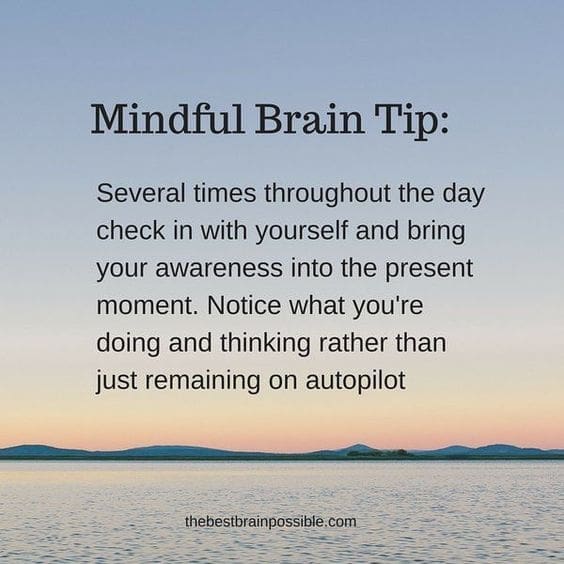
Mindful Walking: Embracing the Present Moment with Every Step Mindful walking is a practice that allows us to connect with our bodies, surroundings, and the present moment through the simple act of walking. It involves bringing our attention and awareness to each step, the sensations in our feet, and the environment around us. Mindful walking can be practiced anywhere, whether it’s a park, a city street, or even within the confines of our own home. In this guide, we will explore the principles and benefits of mindful walking and provide practical tips to incorporate this practice into your daily life. 1. The Principles of Mindful Walking: – Intention and Attention: Before you begin walking, set the intention to be fully present and engaged with each step. Direct your attention to the physical sensations of walking and the environment around you. – Slow and Steady: Walk at a comfortable pace that allows you to be aware of the movements of your body. Slow down your steps and avoid rushing. – Sensory Awareness: Tune into the sensations in your feet as they make contact with the ground. Notice the pressure, the movement of muscles, and the shifting of weight with each step. – Observing the Environment: Open your senses to the environment around you. Notice the sights, sounds, smells, and textures of the surroundings without judgment or interpretation. – Non-Judgmental Observation: Approach the experience with a curious and non-judgmental attitude. Be open to whatever arises without labeling it as good or bad. 2. Benefits of Mindful Walking: – Grounding and Calming: Mindful walking helps to ground us in the present moment, providing a sense of stability and calmness. It can be particularly beneficial during times of stress or when we need to find a moment of tranquillity. – Mind-Body Connection: By focusing on the sensations of walking, we strengthen the mind-body connection. This awareness can deepen our understanding of our physical movements, posture, and overall well-being. – Stress Reduction: Engaging in mindful walking can reduce stress levels by redirecting our attention away from worries or anxieties. It allows us to shift our focus to the present moment and cultivate a sense of peace. – Enhanced Awareness: Mindful walking improves our overall awareness and attentiveness. By actively observing the environment and our own bodily sensations, we become more attuned to the present moment. – Connection with Nature: If practicing mindful walking outdoors, it offers an opportunity to connect with nature. This connection can be invigorating, rejuvenating, and provide a sense of awe and appreciation for the natural world. 3. Practical Tips for Mindful Walking: – Find a Suitable Location: Choose a location that allows for a mindful walking practice, whether it’s a quiet park, a tree-lined path, or a quiet street. – Begin with Intention: Before you start walking, take a moment to set your intention to be present and fully engaged with the experience. – Start Slowly: Begin your walk at a slow and deliberate pace, focusing on the physical sensations of each step. – Pay Attention to Your Feet: Bring your awareness to the sensations in your feet as they make contact with the ground. Notice the movement, pressure, and weight transfer with each step. – Engage Your Senses: Expand your awareness to the environment around you. Notice the colors, sounds, smells, and textures present in your surroundings. – Return to the Present: If your mind wanders, gently bring your attention back to the physical sensations of walking and the present moment. – Practice Gratitude: As you walk, cultivate a sense of gratitude for your body’s ability to move and the opportunity to engage in mindful walking. Incorporating mindful walking into your routine can offer a refreshing perspective, bringing you into the present moment and fostering a deeper connection with your body and the world around you. By embracing each step with intention and attention, you can cultivate a sense of peace, enhance your awareness, and experience the simple joy of walking mindfully.

Mindful Walking: Embracing the Present Moment with Each Step Read More »

mindful eating

Mindful Eating: Nourishing the Body and Fostering a Healthy Food Relationship

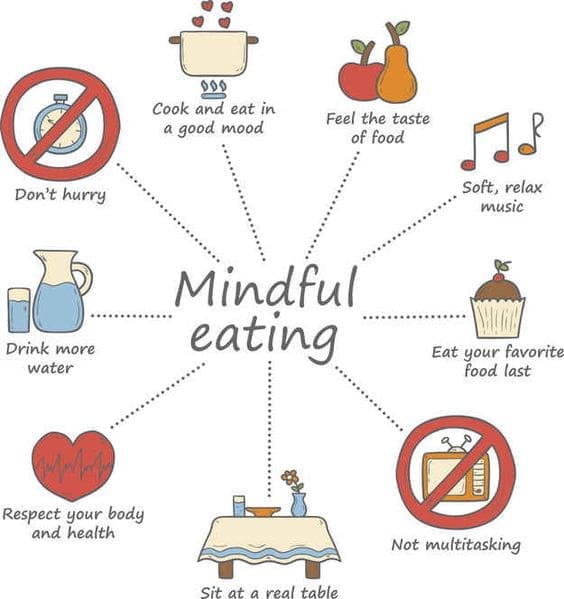
Mindful Eating: In our fast-paced and busy lives, it’s easy to fall into mindless eating habits, consuming food without truly savoring or appreciating it. Mindful eating, on the other hand, is a practice that encourages us to slow down, pay attention, and engage our senses while eating. By cultivating awareness and presence during meals, mindful eating offers numerous benefits for our physical health, emotional well-being, and relationship with food. In this guide, we will explore the principles and benefits of mindful eating and provide practical tips to incorporate this practice into your daily life. 1. The Principles of Mindful Eating: – Present-Moment Awareness: Mindful eating involves bringing your full attention to the present moment, focusing on the sensory experience of eating without distractions. Be fully present with the taste, texture, aroma, and appearance of the food. – Non-Judgmental Observation: Approach food without judgment or criticism. Cultivate a curious and accepting attitude toward your eating experience, observing your thoughts, emotions, and physical sensations without attaching labels of good or bad. – Listening to Hunger and Fullness Cues: Tune in to your body’s signals of hunger and fullness. Eat when you are physically hungry and stop when you are comfortably satisfied, honoring your body’s natural cues. – Savoring and Enjoyment: Slow down the pace of eating and savor each bite. Engage your senses and truly enjoy the flavors, textures, and nourishment that food provides. – Conscious Food Choices: Make conscious choices about what you eat, considering nutritional value and how food makes you feel. Choose foods that nourish and energize your body, while also being mindful of portion sizes. 2. Benefits of Mindful Eating: – Enhanced Digestion: Mindful eating promotes optimal digestion by allowing you to fully engage with your food. Taking time to chew thoroughly and eat slowly supports proper digestion and nutrient absorption. – Weight Management: Mindful eating can help with weight management by increasing awareness of hunger and fullness cues, preventing overeating, and reducing emotional or mindless eating. – Improved Relationship with Food: By cultivating a non-judgmental and compassionate attitude towards food, mindful eating helps foster a healthier and more balanced relationship with eating, reducing guilt or shame associated with food choices. – Emotional Well-being: Mindful eating encourages a deeper connection between our emotions and eating habits. It helps us recognize emotional hunger versus physical hunger, allowing us to address emotional needs without relying on food. – Increased Satisfaction: By savoring and fully experiencing each bite, mindful eating enhances the satisfaction we derive from food. This can lead to feeling more satiated and content with smaller portions. – Mind-Body Connection: Mindful eating promotes a deeper mind-body connection. It encourages us to listen to our body’s cues, honor its needs, and nourish ourselves in a way that supports overall well-being. 3. Practical Tips for Mindful Eating: – Slow Down: Take your time when eating. Put down your utensils between bites, chew slowly, and savor the flavours and textures of each mouthful. – Minimize Distractions: Create a calm and focused eating environment by turning off screens, putting away electronic devices, and sitting down at a designated eating area. – Engage Your Senses: Observe the colours, smells, and textures of your food. Take note of the flavours and how they evolve with each bite. – Listen to Your Body: Tune in to your body’s hunger and fullness cues. Eat when you feel physically hungry and stop when you are comfortably satisfied, rather than eating until you are overly full. – Practice Gratitude: Before you begin eating, take a moment to express gratitude for the food on your plate and the nourishment it provides. – Be Mindful of Portion Sizes: Pay attention to portion sizes and serve yourself amounts that align with your hunger and nutritional needs. – Notice Emotional Triggers: Be aware of emotional triggers that may lead to mindless or emotional eating. Take a pause and explore alternative ways to address emotional needs, such as engaging in self-care activities or seeking support. Incorporating mindful eating into your daily life can transform your relationship with food, enhance your overall well-being, and promote a healthier approach to nourishing your body. By practicing present-moment awareness, non-judgment, and conscious food choices, you can cultivate a sustainable and balanced approach to eating that supports your physical and emotional health.

Mindful Eating: Nourishing the Body and Fostering a Healthy Food Relationship Read More »

self care productivity

The Power of Self-Care: Unlocking Productivity and Happiness

Explore the essential journey of self-care with us, and unlock a world where well-being, creativity, and happiness thrive in the midst of our fast-paced lives. By prioritizing physical, mental, and emotional wellness, discover how self-care can transform your daily experience, fostering resilience and a balanced equilibrium between productivity and personal fulfillment. Understanding the importance of self-care for productivity and happiness Self-care is often misunderstood as a luxury, something reserved for those with ample free time and resources. However, the truth is that self-care is a necessity for everyone, regardless of their circumstances. It is the foundation upon which we build our productivity and happiness. Without proper self-care, our physical and mental health can suffer. Neglecting ourselves can lead to burnout, decreased motivation, and a decline in overall well-being. On the other hand, when we prioritize self-care, we give ourselves the tools we need to thrive. Self-care allows us to recharge our batteries, giving us the energy and focus necessary to tackle our daily tasks with efficiency and enthusiasm. It helps us maintain a positive mindset, enabling us to overcome challenges and setbacks with resilience. By taking care of ourselves, we become better equipped to handle the demands of life, both personally and professionally. The connection between self-care and mental health One of the most significant benefits of practicing self-care is its positive impact on our mental health. In our fast-paced society, stress and anxiety have become all too common. Self-care provides us with the tools to combat these mental health challenges. Engaging in self-care activities, such as exercise, meditation, and spending time in nature, helps to reduce stress levels and promote relaxation. These practices activate the body’s relaxation response, counteracting the effects of chronic stress. Additionally, self-care allows us to prioritize our emotional well-being. It provides us with the opportunity to acknowledge and address our emotions, fostering a greater sense of self-awareness and emotional resilience. By taking care of our mental health, we can enhance our overall happiness and well-being. Benefits of incorporating self-care into your routine Incorporating self-care into our daily routines offers a multitude of benefits. From improved physical health to increased productivity and happiness, self-care is a powerful tool that can enhance every aspect of our lives.   Physically, self-care practices such as regular exercise, healthy eating, and adequate sleep promote overall well-being. These activities boost our energy levels, strengthen our immune system, and improve our physical endurance. By investing in our physical health, we can experience increased productivity, as well as a greater sense of vitality and happiness. Mentally, self-care activities such as meditation, journaling, and engaging in hobbies provide us with much-needed mental space. These practices allow us to relax, recharge, and rejuvenate our minds. By incorporating self-care into our routines, we can enhance our focus, creativity, and problem-solving abilities, ultimately improving our productivity and overall happiness. Self-care ideas for enhancing productivity When it comes to self-care, there is no one-size-fits-all approach. Each individual has unique needs and preferences. However, there are several self-care ideas that are known to enhance productivity and can be tailored to suit your lifestyle. One effective self-care practice for enhancing productivity is creating a morning routine. Starting your day with activities that nourish your mind, body, and spirit sets a positive tone for the rest of the day. This may include activities such as meditation, exercise, reading, or practicing gratitude. Another self-care idea is setting boundaries and learning to say no. In our fast-paced society, it’s easy to become overwhelmed with commitments and obligations. By setting clear boundaries and prioritizing your own needs, you can create space for self-care and protect your productivity. Additionally, taking regular breaks throughout the day is crucial for maintaining productivity. Engaging in short bursts of physical activity, practicing deep breathing exercises, or simply stepping away from your desk for a few minutes can significantly improve your focus and productivity. Self-care practices for boosting happiness Self-care is not just about productivity; it’s also about finding joy and fulfillment in our lives. Incorporating self-care practices that boost our happiness can have a profound impact on our overall well-being. One self-care practice for boosting happiness is practicing gratitude. Taking the time to reflect on the things we are grateful for can shift our focus from what is lacking to what is abundant in our lives. This simple practice cultivates a positive mindset and enhances our overall happiness. Engaging in activities that bring us joy and fulfillment is another powerful self-care practice. This may include hobbies, spending time with loved ones, or pursuing creative outlets. By prioritizing activities that bring us happiness, we nourish our souls and enhance our overall well-being. Creating a self-care plan To incorporate self-care effectively into our lives, it’s essential to create a self-care plan. A self-care plan helps us prioritize our well-being and ensures that we are consistently engaging in activities that promote our productivity and happiness. Start by identifying the self-care activities that resonate with you the most. Reflect on the activities that bring you joy, relaxation, and a sense of fulfillment. These activities will form the foundation of your self-care plan. Next, consider your schedule and commitments. Allocate specific time slots for self-care activities, ensuring that they are given the same level of importance as other tasks. Treat these time slots as non-negotiable, just like any other important appointment or deadline. Finally, be flexible and open to adjusting your self-care plan as needed. Life is unpredictable, and circumstances may arise that require you to adapt your self-care routine. By remaining flexible and open-minded, you can ensure that self-care remains a priority, even during challenging times. Overcoming obstacles to practicing self-care While self-care is crucial for our productivity and happiness, it’s not always easy to prioritize. We often face various obstacles that can hinder our self-care efforts. However, with the right mindset and strategies, we can overcome these obstacles and make self-care a non-negotiable part of our lives. One common obstacle to practicing self-care is guilt. Many of us feel guilty for

The Power of Self-Care: Unlocking Productivity and Happiness Read More »

Meditation

Unlocking the Power of Mindfulness: Enhancing Focus and Emotional Resilience for Transformation

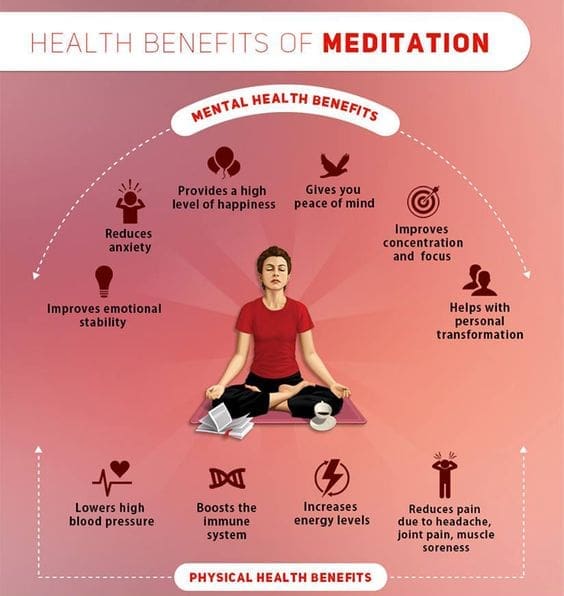
What is mindfulness? Mindfulness, a practice rooted in ancient Buddhist traditions, has gained significant popularity in recent years for its numerous benefits to our mental and emotional well-being. At its core, mindfulness is the practice of intentionally bringing our attention to the present moment, without judgment. It involves fully engaging our senses, thoughts, and emotions, allowing us to embrace the present and let go of worries about the past or future. The benefits of mindfulness The benefits of mindfulness are vast and far-reaching. Numerous studies have shown that regular mindfulness practice can lead to reduced stress and anxiety, improved focus and concentration, enhanced emotional resilience, and even physical health benefits. By training our minds to focus on the present moment, we can cultivate a sense of inner peace and contentment, leading to an overall improvement in our quality of life. Scientific evidence supporting the benefits of mindfulness Scientific research has consistently shown the positive impact of mindfulness on our well-being. Studies have demonstrated that mindfulness practice can reduce the production of stress hormones, lower blood pressure, and improve immune function. Furthermore, brain imaging studies have revealed that regular mindfulness practice can increase the thickness of the prefrontal cortex, the part of the brain responsible for decision-making and emotional regulation, leading to improved cognitive abilities and emotional well-being. How mindfulness improves focus In today’s fast-paced world, maintaining focus can be a challenge. Mindfulness can help us train our minds to stay present and concentrate on the task at hand. By practicing mindfulness, we become more aware of distractions and learn to gently bring our attention back to the present moment. Over time, this strengthens our ability to sustain focus and ignore the constant barrage of thoughts and external stimuli that can derail our concentration. How mindfulness enhances emotional resilience Emotional resilience refers to our ability to adapt and bounce back from stressful or challenging situations. Mindfulness plays a crucial role in enhancing our emotional resilience by teaching us to observe our thoughts and emotions without judgment. By cultivating a non-reactive and compassionate attitude towards our internal experiences, we can develop greater emotional self-regulation and reduce the impact of negative emotions on our well-being. Mindfulness also helps us cultivate a sense of acceptance and equanimity, enabling us to navigate life’s ups and downs with grace and resilience. Mindfulness techniques for beginners If you’re new to mindfulness, there are several simple techniques you can incorporate into your daily routine to start reaping its benefits. One common technique is mindful breathing, where you focus your attention on the sensation of your breath entering and leaving your body. Another technique is body scan meditation, where you systematically bring your attention to different parts of your body, observing any sensations or tension without judgment. Mindful walking, eating, and listening are other practices that can help you cultivate mindfulness in your everyday life. Incorporating mindfulness into your daily routine To fully experience the benefits of mindfulness, it’s important to integrate it into your daily routine. You can start by setting aside a few minutes each day for formal mindfulness practice, such as sitting meditation or guided mindfulness exercises. Additionally, you can incorporate mindfulness into your daily activities by bringing a sense of presence and awareness to everyday tasks like washing dishes, brushing your teeth, or taking a shower. By infusing mindfulness into your routine, you can transform ordinary moments into opportunities for self-care and personal growth. Mindfulness and its impact on mental health In addition to its physical benefits, mindfulness has been shown to have a profound impact on mental health. Research suggests that mindfulness can reduce symptoms of depression, anxiety, and post-traumatic stress disorder. By cultivating a non-judgmental and accepting attitude towards our thoughts and emotions, mindfulness helps us develop a healthier relationship with our mental experiences. It allows us to observe our thoughts from a distance, without getting caught up in their content, thereby reducing their power over us and promoting mental well-being. Mindfulness practices for improved physical health While mindfulness is primarily associated with mental and emotional well-being, it also has significant implications for physical health. Studies have shown that mindfulness can reduce chronic pain, improve sleep quality, and strengthen the immune system. By training our minds to focus on the present moment and cultivating a sense of acceptance towards physical sensations, we can alleviate the suffering associated with chronic pain and illness. Additionally, mindfulness-based interventions have been shown to be effective in managing weight, reducing cravings, and promoting healthy eating habits. Conclusion Unlocking the power of mindfulness can truly transform your life. By incorporating mindfulness into your daily routine, you can improve your focus and concentration, enhance your emotional resilience, and experience a greater sense of well-being. The benefits of mindfulness practice are supported by scientific evidence, demonstrating its positive impact on both mental and physical health. Whether you’re a beginner or have been practicing mindfulness for years, there are numerous techniques and strategies you can explore to deepen your practice and continue reaping its benefits. Embrace the power of mindfulness and embark on a journey of self-discovery and personal growth.

Unlocking the Power of Mindfulness: Enhancing Focus and Emotional Resilience for Transformation Read More »

healthy lifestyle 4

Discovering Mindfulness: A Journey towards a Balanced and Meaningful Life

Practice Mindfulness for Balance and Meaning in Life Living in the modern world full of distractions and stressors can make it difficult to find balance and meaning. The ancient practice of mindfulness provides a solution. Mindfulness means focusing your awareness on the present moment without judgment. It involves paying attention to your thoughts, emotions, body sensations, and environment. Regular mindfulness meditation can lead to greater self-understanding and appreciation of the world around you. Ultimately, developing a mindfulness practice helps you live a more balanced, peaceful, and meaningful life in the midst of chaos. Mindfulness gives you the tools to find inner calm and fulfillment even when external circumstances seem out of control. Start reaping the many benefits of mindfulness by learning to bring full awareness to the present. What is Mindfulness? Mindfulness is the art of paying attention on purpose. It is about being fully present in the here and now, rather than being lost in thoughts about the past or worries about the future. By directing our attention to the present moment, we can experience life more fully and deeply. Mindfulness is not about trying to change our thoughts or feelings, but rather about accepting them as they are, without judgment. It is about developing a non-reactive and compassionate stance towards ourselves and others. The Benefits of Practicing Mindfulness The practice of mindfulness offers a wide range of benefits for our physical, mental, and emotional well-being. Research has shown that regular mindfulness practice can reduce stress, anxiety, and depression. It can also improve our attention span, cognitive abilities, and overall happiness. By cultivating mindfulness, we can become more aware of our automatic patterns of thinking and behaving, and gain the ability to respond to life’s challenges with greater clarity and wisdom. Mindfulness also enhances our relationships by improving our ability to listen, empathize, and communicate effectively. Mindfulness for Beginners: How to Start Practicing Mindfulness If you’re new to mindfulness, getting started can feel overwhelming. But the good news is that mindfulness is a skill that can be developed with practice. Here are a few simple steps to help you begin your mindfulness journey:       Set aside some dedicated time each day for mindfulness practice. Start with just a few minutes and gradually increase the duration as you become more comfortable.       Find a quiet and comfortable place where you can sit or lie down without distractions. Close your eyes or keep them open, whatever feels more natural to you.       Bring your attention to your breath. Notice the sensation of the breath as it enters and leaves your body. Whenever your mind wanders, gently bring it back to the breath without judgment.       Expand your awareness to include other sensations in your body, such as any tension or discomfort. Observe these sensations without trying to change them.       Notice any thoughts or emotions that arise, but don’t get caught up in them. Simply observe them as passing phenomena, like clouds in the sky. By practicing these simple steps, you can begin to develop a foundation of mindfulness in your life. Mindfulness Exercises for Everyday Life While dedicated meditation practice is an essential part of mindfulness, it’s also important to bring mindfulness into our everyday activities. Here are a few mindfulness exercises you can incorporate into your daily life:       Mindful Eating: Pay attention to the taste, texture, and smell of your food. Chew slowly and savor each bite.       Mindful Walking: Notice the sensation of your feet touching the ground with each step. Be aware of the sights, sounds, and smells around you as you walk.       Mindful Listening: When someone is speaking to you, give them your full attention. Listen without interrupting or thinking about what you’re going to say next.       Mindful Breathing: Throughout the day, take a few moments to pause and bring your attention to your breath. Notice the sensation of the breath as it enters and leaves your body. By integrating these mindfulness exercises into your daily routine, you can bring a greater sense of presence and awareness to each moment. Mindfulness in Plain English: Understanding the Core Principles To deepen your understanding of mindfulness, it can be helpful to explore the core principles behind the practice. Mindfulness is based on several key principles:   Non-judgment: Cultivating a non-judgmental attitude towards our experiences allows us to observe them without getting caught up in self-criticism or self-blame.   Acceptance: Accepting things as they are, without trying to change them, creates a sense of inner peace and contentment.   Beginner’s Mind: Approaching each moment with a sense of curiosity and openness, as if experiencing it for the first time, helps us break free from our preconceived notions and biases.   Letting Go: Letting go of attachment to thoughts, emotions, and outcomes allows us to experience greater freedom and ease. By embodying these core principles in our daily lives, we can cultivate a deeper sense of mindfulness and live more fully in the present moment. Mindfulness and Stress Reduction One of the key benefits of mindfulness is its ability to reduce stress. When we practice mindfulness, we become more aware of our stress triggers and learn to respond to them in a more skillful way. By cultivating a non-reactive and compassionate stance towards our stressors, we can break free from the cycle of reactivity and create a sense of calm and ease. Mindfulness also helps us develop a greater capacity to tolerate stress and bounce back from challenging situations. Mindfulness and Emotional Well-being Mindfulness can also have a profound impact on our emotional well-being. By bringing our attention to our thoughts and emotions, we can develop a greater understanding of their underlying causes and patterns. This awareness allows us to respond to our emotions in a more skilful way, rather than reacting impulsively. Mindfulness also helps us cultivate a sense of self-compassion and acceptance, which can lead to

Discovering Mindfulness: A Journey towards a Balanced and Meaningful Life Read More »