
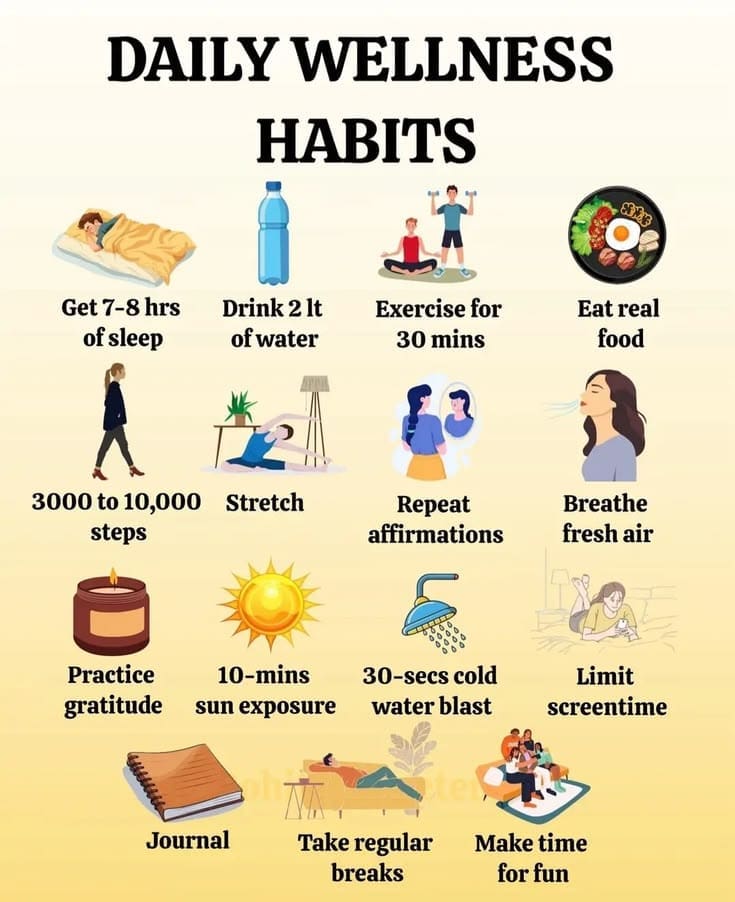
Building Daily Wellness Habits can help improve both physical and mental well-being over time. Small actions such as staying active, practicing mindfulness, and maintaining healthy routines can make a significant difference in overall health. By focusing on consistent habits each day, it becomes easier to create a balanced lifestyle that supports long-term wellness.
Daily Wellness Habits: Why Consistency Matters for Well-Being
Developing Daily Wellness Habits encourages people to take simple steps that support their health every day. Regular routines such as stretching, mindful breathing, balanced nutrition, and adequate rest can contribute to better energy levels and improved focus. Over time, these habits can help create a stronger foundation for both physical and emotional well-being.
Understanding Daily Wellness
Daily wellness encompasses various aspects of health—including physical, mental, emotional, and social well-being. It’s about creating habits that nurture and promote your health every single day. Rather than making drastic changes overnight, the focus is on small, manageable shifts that compound over time.
The Importance of Daily Wellness
You might wonder why daily wellness habits are so crucial. Well, maintaining a consistent routine can enhance your resilience to stress, improve your mood, and foster a sense of balance in your life. Additionally, investing time in your well-being can lead to better physical health and increased longevity.
Physical Wellness Habits
Physical wellness is often the first area people think about when it comes to habits. These actions directly influence your body’s functionality and overall vitality.
Exercise Regularly
Incorporating exercise into your daily routine can be transformative. Aim for at least 30 minutes of moderate physical activity most days of the week. This can include walking, jogging, cycling, or any activity that gets your heart rate up.
| Type of Exercise | Duration | Frequency |
|---|---|---|
| Aerobic (e.g., jogging) | 30 minutes | 3-5 times a week |
| Strength training (e.g., lifting weights) | 20-30 minutes | 2-3 times a week |
| Flexibility (e.g., yoga) | 15-20 minutes | Daily |
With regular exercise, you can improve your mood, boost your energy levels, and enhance your overall health.
Nourish Your Body
What you eat has a significant impact on your physical wellness. Prioritize whole, nutrient-dense foods such as fruits, vegetables, whole grains, lean proteins, and healthy fats.
- Fruits and Vegetables: Aim for a variety of colors in your diet. Each color often signifies different nutrients.
- Whole Grains: Choose brown rice, quinoa, and whole wheat products over refined grains.
- Lean Proteins: Incorporate fish, poultry, legumes, and nuts into your meals.
- Healthy Fats: Use olive oil, nuts, seeds, and avocados to add healthy fats without unnecessary trans fats.
Stay Hydrated
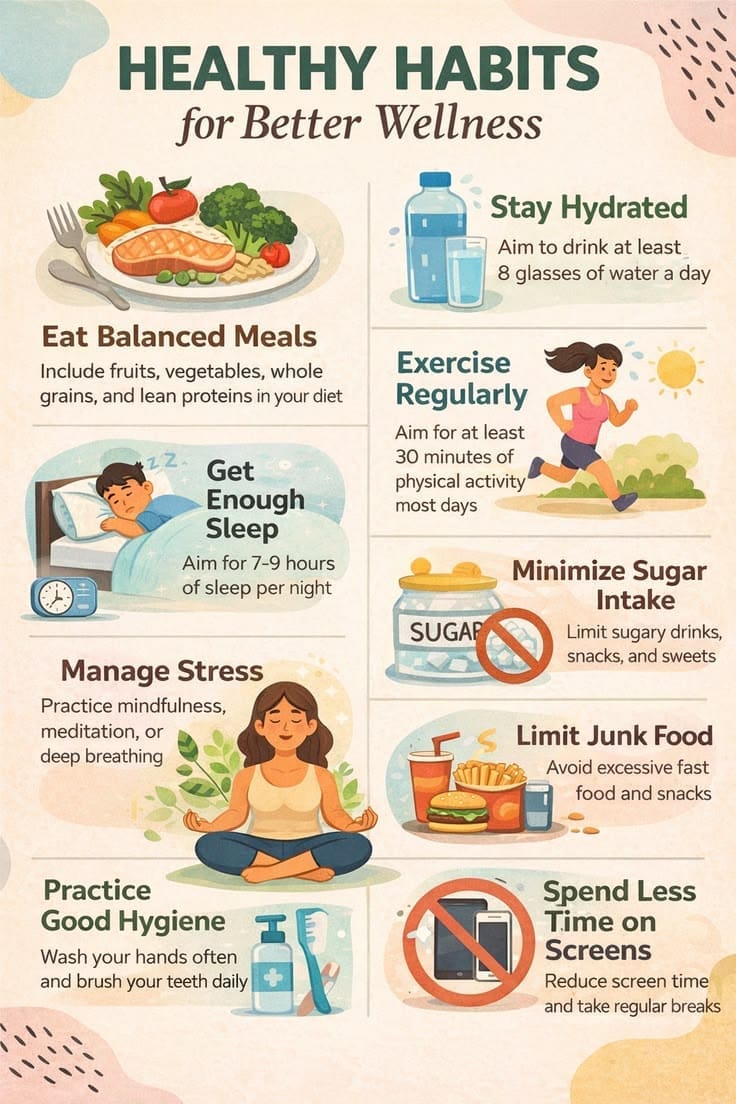
Drinking enough water daily is crucial for your physical wellness. Dehydration can affect your energy levels, cognitive function, and overall health. A good rule of thumb is to aim for at least eight 8-ounce glasses of water daily, adjusting based on your activity level and environment.
- Simple Tips:
- Carry a water bottle.
- Set reminders to drink water.
- Infuse water with fruits or herbs for added flavor.
Mental Wellness Habits
Mental wellness focuses on your cognitive and emotional health. To thrive mentally, you’ll want to engage in practices that promote a positive mindset and emotional balance.
Practice Mindfulness
Mindfulness involves being present in the moment without judgment. This practice can reduce anxiety and improve your overall mental clarity. You can practice mindfulness through various techniques, including meditation, breathing exercises, and mindful walking.
Mindful Breathing Exercise
- Find a quiet place to sit comfortably.
- Close your eyes and take a deep breath in through your nose.
- Hold for a moment and then exhale slowly through your mouth.
- Repeat for five minutes, focusing solely on your breath.
Foster Positive Relationships
Your social connections can significantly impact your mental well-being. Cultivating relationships with friends, family, or support groups can provide a sense of belonging and community.
- Simple Ways to Nurture Relationships:
- Schedule regular catch-ups with friends or family.
- Engage in community activities.
- Be open to new friendships through hobbies or events.
Set Boundaries
Creating boundaries in your personal and professional life can significantly reduce stress and prevent burnout. Learn to say no when necessary and prioritize your mental well-being.
Emotional Wellness Habits
Emotional wellness is about understanding and managing your emotions. Engaging in practices that support emotional health can help you cope with challenges effectively.
Journaling
Writing down your thoughts and feelings can be an excellent way to process emotions and gain insight into your life. Make it a habit to jot down your experiences, reflections, and even things you’re grateful for each day.
Quick Journaling Prompts
- What made you smile today?
- What challenges did you face, and how did you cope?
- List three things you’re grateful for.
Seek Professional Support
If you find yourself struggling with emotional challenges, consider seeking support from a mental health professional. Therapy can provide valuable strategies and tools to navigate your feelings.
Practice Gratitude
Cultivating a gratitude practice can shift your focus from what’s lacking in your life to appreciating what you have. This simple habit can lead to increased happiness and decreased feelings of resentment.
- Steps for a Gratitude Practice:
- Write down three things you’re grateful for each day.
- Share your gratitude with others.
Social Wellness Habits
Social wellness refers to how you interact with others and the quality of your relationships. Prioritizing this aspect of wellness can significantly enhance your sense of belonging.
Engage in Community Activities
Getting involved in your community can foster important connections. Whether it’s volunteering, joining local clubs, or participating in events, being active in your community builds relationships and helps you meet new people.
| Activity Type | Possible Activities |
|---|---|
| Volunteering | Animal shelters, food banks, schools |
| Clubs | Book clubs, hiking groups, art classes |
| Events | Workshops, local fairs, public meetings |
Cultivate Empathy
Building empathy allows you to understand and share the feelings of others. This practice deepens relationships and enhances your ability to connect with those around you.
- Ways to Cultivate Empathy:
- Listen actively when others speak.
- Ask others about their experiences.
- Reflect on how you would feel in their situation.
Spiritual Wellness Habits
Spiritual wellness is connected to your values and beliefs. It’s about finding meaning and purpose in your life, which can be achieved through various practices.
Reflect on Your Values
Regularly take time to reflect on what matters most to you. Understanding your core values can guide your decisions and help you lead a more authentic life.
- Questions to Consider:
- What do I value most in life?
- How do my actions reflect my values?
- Am I living authentically according to my beliefs?
Connect with Nature
Spending time in nature can nurture your spirit and enhance your sense of peace. Whether it’s a walk in the park, gardening, or hiking, immersing yourself in the natural world can restore your energy.
Set Intentions
Establishing daily intentions can give your actions purpose. Each morning or evening, think about what you want to achieve or how you want to feel that day.
Creating a Daily Wellness Routine
Now that you have an understanding of various wellness habits, how do you create a daily routine that incorporates them?
Morning Rituals
Starting your day with positive rituals can set the tone for the hours ahead. Consider including:
- Hydration: Start your morning with a glass of water.
- Movement: Stretch or do a short workout.
- Mindfulness: Spend a few minutes meditating or journaling.
Daily Check-Ins
Make it a habit to periodically check in with yourself throughout the day. Ask yourself how you’re feeling—physically and emotionally. Adjusting plans or taking breaks when needed can greatly benefit your overall wellness.
Evening Practices
End your day with rituals that promote relaxation and reflection. Such practices might include:
- Dedicate Time for Connection: Share a meal or chat with someone you care about.
- Unplug from Technology: Spend some time away from screens before bed.
- Reflect on Your Day: Write in your journal or meditate on what you’ve accomplished.
Overcoming Obstacles
You may face obstacles when trying to implement daily wellness habits. Recognizing potential barriers is crucial for maintaining consistency.
Common Barriers
- Time Constraints: Life can be busy, making it challenging to prioritize wellness.
- Lack of Motivation: Some days you simply might not feel like it.
- Unrealistic Expectations: Trying to overhaul your life overnight can lead to frustration.
Strategies to Overcome Barriers
- Start Small: Begin with one or two habits and gradually incorporate others.
- Set Reminders: Use phone alarms or sticky notes to remind yourself of your wellness goals.
- Find an Accountability Partner: Sharing your goals with a friend can motivate you to stay on track.
The Benefits of Daily Wellness Habits
Establishing daily wellness habits pays off in numerous ways. You’ll likely notice improvements in your mood, physical health, relationships, and overall quality of life.
Enhanced Physical Health
Regular wellness habits can lead to lower risks of chronic diseases, improved immune function, and enhanced energy levels. When you feel physically well, it can positively influence every other area of your life.
Improved Mental Clarity
Adopting mindfulness practices, proper nutrition, and regular exercise can sharpen your cognitive function and creativity. You’ll find it easier to focus and tackle daily tasks effectively.
Stronger Relationships
As you invest in your own wellness, you may also notice improvements in your relationships with others. When you feel balanced and fulfilled, you can better support and connect with those around you.
Increased Resilience
Daily wellness habits can bolster your resilience against life’s challenges. When you’re physically and mentally well, stressors become easier to cope with, leading to a more positive outlook.
Conclusion
Incorporating daily wellness habits into your life is an ongoing journey rather than a destination. Start with small changes that resonate with you, and gradually expand your routine to encompass more aspects of wellness. Remember, your well-being matters—by prioritizing daily habits, you’re investing in a happier, healthier, and more fulfilling life. So, what are you waiting for? Let’s get started on your wellness journey today!
[hfe_template id=’4070′]