
Yoga

Strewss less

What Are Benefits Of Hot Yoga

In this article, we explore the numerous benefits of incorporating hot yoga into one’s fitness routine. From increased flexibility and strength to improved cardiovascular health and mental well-being, hot yoga offers a unique blend of physical and mental benefits. With the elevated temperatures in hot yoga studios, practitioners can experience enhanced detoxification and calorie burning, leading to potential weight loss and improved muscle tone. In addition, the meditative aspect of hot yoga helps reduce stress and anxiety, promoting a sense of inner calm and balance. Discover how hot yoga can revolutionize your mind and body, leaving you feeling rejuvenated and invigorated. Improved Flexibility Increased muscle elasticity Hot yoga is a highly effective practice for improving flexibility, as the high temperatures help to increase muscle elasticity. When our muscles are warm, they are more pliable and able to stretch further without the risk of injury. This increased muscle elasticity allows us to achieve deeper stretches and poses, thereby enhancing our overall range of motion. Improved range of motion By practicing hot yoga regularly, we can experience a significant improvement in our range of motion. The combination of the heat and the various stretching exercises helps to loosen our muscles and increase their flexibility. As a result, we can move our joints more freely and comfortably, allowing us to perform daily activities with greater ease and reducing the risk of muscle strains or joint injuries. Decreased risk of injury Hot yoga can also help to decrease the risk of injury by improving our flexibility. When our muscles are more flexible, they are less likely to become strained or torn during physical activities. Additionally, the heat in the hot yoga studio can help to warm up our muscles and increase blood flow, reducing the likelihood of muscle cramps or sprains. This decreased risk of injury is especially beneficial for athletes or individuals who engage in high-impact sports or activities. Enhanced Strength Increased muscle tone Practicing hot yoga can lead to increased muscle tone throughout our body. The heat and intensity of the practice provide a challenging and dynamic workout that engages and activates various muscle groups. As we hold different poses and flow through sequences, our muscles are continuously working and contracting, leading to improved muscle tone and sculpting. Enhanced muscular endurance Hot yoga is also an excellent form of exercise to enhance muscular endurance. The demanding nature of the practice requires us to maintain poses for longer periods, often in a heated environment. This prolonged engagement of our muscles helps to improve their endurance over time. As our muscles become more accustomed to the practice, we can stay in poses for extended periods, building strength and endurance in our muscles. Improved core strength A significant benefit of hot yoga is its ability to improve core strength. The practice involves a wide range of poses that target the muscles in our abdomen, back, and pelvic region. These poses, such as planks and boat pose, require us to engage our core muscles to maintain stability and balance. Regular practice of hot yoga can lead to a stronger core, which not only enhances our overall physical fitness but also improves our posture and helps to prevent back pain. Enhanced Cardiovascular Health Increased heart rate Hot yoga is a cardiovascular exercise that can help to increase our heart rate. The combination of the heat and the physical intensity of the practice elevates our heart rate, promoting a healthy cardiovascular workout. When our heart rate increases, it strengthens our heart muscle and improves its efficiency, leading to better overall cardiovascular health. Improved blood circulation The heat in a hot yoga class causes our blood vessels to dilate, which in turn improves blood circulation throughout our body. This increased blood flow delivers essential nutrients and oxygen to our muscles and organs, promoting their optimal function. Improved blood circulation also aids in the removal of waste products and toxins from our body, contributing to our overall health and well-being. Boosted cardiovascular endurance Regular practice of hot yoga can lead to a significant improvement in cardiovascular endurance. The combination of the duration, intensity, and heat of the practice challenges our cardiovascular system, forcing it to adapt and become more efficient. As we continue to practice, our lungs become stronger, and our body becomes better equipped to handle physical exertion, leading to increased cardiovascular endurance. Detoxification Increased sweating One of the key benefits of hot yoga is the increased sweating that occurs during the practice. The high temperatures in the hot yoga studio cause our body to sweat profusely, which helps to flush out toxins and impurities from our system. Sweating is a natural means of detoxification for our body and can contribute to improved overall health and well-being. Flushes out toxins The combination of the heat and the physical exertion in hot yoga helps to promote detoxification by flushing out toxins from our body. As we sweat, toxins and impurities are released through our skin, allowing our body to eliminate them. This cleansing process can leave us feeling refreshed, rejuvenated, and lighter, both physically and mentally. Improves skin health Hot yoga has been known to improve skin health. The heat and increased blood circulation during the practice promote the release of toxins through our sweat, which can improve the appearance of our skin. Regular hot yoga practice can help to clear our pores, reduce acne breakouts, and enhance our natural glow. Additionally, the improved blood circulation delivers essential nutrients to our skin, promoting its overall health and vitality. Weight Loss Burns calories Hot yoga is an excellent form of exercise for burning calories. The combination of the heat and the physical intensity of the practice stimulates our metabolism, causing our body to burn calories at an accelerated rate. A regular hot yoga practice can help to create a calorie deficit, which is essential for weight loss. Increases metabolism Practicing hot yoga regularly can also help to increase our metabolism. The heat in the studio raises our body temperature, which

What Are Benefits Of Hot Yoga Read More »

today is great day

How To Improve Yoga Poses: A Comprehensive Guide

Yoga, a practice blending physical, mental, and spiritual elements, continually evolves with each practitioner. One question many have is: “How to improve yoga poses?” Delving into this matter reveals numerous methods to elevate the practice. The Foundation of Every Pose At the core of improving any yoga pose is the establishment of a solid foundation. This foundation is not merely about the parts of your body that touch the ground but also encompasses the preparatory poses that lead up to more complex asanas.     Alignment is Key One primary answer to “How To Improve Yoga Poses” is proper alignment. Ensuring your body is correctly aligned in every pose prevents unnecessary strain and potential injuries. Breath and Movement Synchronization Breathing is integral to mastering how to improve yoga poses. By synchronizing your breath with movements, poses deepen, focus sharpens, and relaxation intensifies. Harness the Power of Drishti (Focused Gaze) Drishti, or a focused gaze, is a potent tool when exploring how to improve yoga poses. It anchors movement, heightens balance, and enhances the practice’s meditative aspect. Employ the Use of Props To further understand how to improve yoga poses, consider props. Blocks, straps, and bolsters can facilitate correct alignment, deepen stretches, or render poses more accessible. Mindfulness and Intention An essential element in the quest of how to improve yoga poses is mindfulness. Being present and setting a clear intention can profoundly transform your practice. Seek Expert Guidance Joining specialized workshops or working with experienced instructors can provide tailored feedback, aiding in the refinement of poses. Regular Practice and Patience Improvement comes with consistent practice. Being patient with your body and acknowledging its progress is vital. Customize Your Practice Remember, every body is unique. What works for one person might not work for another. Understand your body’s needs and limitations and tailor your practice accordingly. Listen to Your Body Yoga is about uniting the mind and body. Pay attention to the signals your body sends. Pushing too hard can be counterproductive. The Role of Meditation and Visualization Meditation and visualization can aid in understanding poses at a deeper level. Visualize yourself in a pose to understand its dynamics even before practicing it physically. The Anatomy of Yoga Having a basic understanding of human anatomy can significantly benefit your practice. It can guide alignment, engagement, and relaxation in poses. The Importance of a Warm-Up Just like any other physical activity, a proper warm-up is essential in yoga. It prepares the body and mind for more intense postures and sequences. Post-Practice Cool Down and Rest Finishing with poses that relax and restore the body, like Savasana, is as crucial as the practice itself. It aids recovery and assimilation. Feedback and Self-Reflection Taking time to self-reflect after practice or seeking feedback can provide insights into areas of improvement. Advanced Techniques and Modifications As you progress, exploring advanced techniques and modifications can add depth to your practice and challenge your limits. Staying Updated with Trends and Research The world of yoga is ever-evolving. Staying updated with the latest research and trends can provide new insights and techniques to incorporate into your practice. Diet and Hydration What you consume plays a role in your yoga practice. A balanced diet and proper hydration support energy levels and muscle function. Rest and Recovery Allowing the body time to rest and recover after intense sessions ensures muscle recovery and reduces the risk of injury. Setting Personal Goals Having clear, achievable goals can guide your practice and provide motivation. Understanding the Philosophy Behind Poses Beyond the physical, understanding the philosophy and intention behind poses can add a deeper layer of meaning to your practice. Commit to Lifelong Learning Yoga is a lifelong journey. Continual learning and staying curious will keep the practice fresh and inspiring. FAQs Why is alignment essential in how to improve yoga poses? Proper alignment ensures safe positioning in each pose, maximizing benefits and minimizing injury risks.. How often should one practice to truly grasp how to improve yoga poses? While individual needs vary, a frequency of 3-5 times weekly can lead to marked improvements. Can props be used in any pose? Props can be utilized in many poses to aid alignment, deepen the stretch, or make the pose more accessible. Is breathing essential in improving poses? Absolutely! Breath acts as a bridge between the mind and body, enhancing focus and aiding in deeper engagement of poses. Do advanced yoga poses mean a better practice? Not necessarily. The depth of your practice is more about mindfulness, alignment, and intention rather than the complexity of poses. How can meditation help in understanding poses? Meditation promotes mindfulness and awareness, helping in understanding the depth of a pose. Conclusion Embarking on the journey of “How To Improve Yoga Poses” is about more than just physical refinement; it’s a dance of the mind, body, and spirit. With patience, practice, and the right techniques, you can continually elevate your yoga experience, tapping into its profound benefits for holistic well-being [hfe_template id=’4070′]

How To Improve Yoga Poses: A Comprehensive Guide Read More »

Yoga poses

Exploring the Profound Benefits of Yoga Poses for Your Well-Being

Embark on a journey of well-being as we delve into the diverse world of yoga poses. Discover the ancient roots of yoga, explore a wide range of poses, and uncover the multitude of mental and physical benefits they offer. Primarily, regular engagement with yoga postures serves as a catalyst for enhanced physical well-being and heightened flexibility. As we stretch our bodies and hold these diverse poses, our musculature undergoes fortification and toning, thereby amplifying our range of motion and fostering an improved stance. Moreover, yoga has been scientifically proven to alleviate stress and induce relaxation by activating the body’s innate relaxation response. By directing our focus towards controlled breathing and complete presence in the moment during yoga, individuals stand to benefit from reduced anxiety levels and a general elevation in mental well-being. Furthermore, the recurrent practice of yoga postures contributes to enhanced equilibrium, coordination, and an elevated sense of bodily awareness, particularly advantageous for the elderly demographic. In summation, the incorporation of yoga postures into one’s daily regimen brings forth a plethora of physical, mental, and emotional advantages. From the augmentation of flexibility and physical vigor to stress mitigation and an amplified sense of relaxation, the benefits of routine yoga practice are extensive and far-reaching. Why not embark on this journey and personally experience the constructive impact of yoga poses?   Elevated Flexibility and Expanded Range of Motion Yoga has garnered renown for its aptitude in augmenting flexibility. Through consistent practice, we gradually expand our range of motion and become more limber. Flexibility, in essence, signifies the capacity of our muscles and joints to traverse their complete spectrum without impedance or discomfort. This augmented flexibility not only facilitates seamless execution of yoga poses but also heightens our overall physical dexterity in activities, be it sports or everyday motions. Flexibility assumes a pivotal role in injury prevention, as taut muscles and joints are predisposed to strains and sprains. By incorporating yoga poses into our fitness routines, we incrementally elongate and stretch our musculature, liberating pent-up tension and nurturing elasticity. This newfound flexibility transcends the confines of our physicality, fostering an open-minded disposition and adaptability in our daily encounters. Expanded Range of Motion The practice of yoga further enriches our range of motion. Range of motion denotes the extent or breadth of joint mobility in various directions. Through consistent engagement in yoga poses that concentrate on extension and mobilization of joints, we embark on a journey towards augmenting our range of motion and attaining a heightened freedom of movement. An improved range of motion inherently enhances our comprehensive physical functionality. It enables us to perform day-to-day tasks with greater efficiency, such as reaching for objects, bending, or executing body twists. Furthermore, an extended range of motion within our joints bolsters our athletic prowess, positioning us for excellence in activities that hinge on flexibility and agility. Amplified Muscular Strength and Tone Yoga’s attributes extend beyond flexibility, delving into the realm of muscular strength. Despite the perception of yoga as a gentle form of exercise, many yoga poses necessitate considerable strength and simultaneous engagement of multiple muscle groups. Regular practice begets the development of lean muscle mass and an overall enhancement of physical vigor. Yoga poses often entail isometric contractions, a scenario where muscles contract without substantial movement. This modality of muscle engagement fosters strength by resisting opposing forces within our bodies. Sustaining poses and transitioning between various postures demand strength and stability, with a particular emphasis on the core, arms, legs, and back musculature. Elevated Muscle Tone In tandem with strength, yoga fosters enhanced muscle tone. Muscle tone denotes the firmness or tension present in our muscles during periods of rest. Consistent practice of yoga poses triggers an active challenge to our muscles, compelling them to attain a leaner and more sculpted state. This elevated muscle tone extends benefits beyond the superficial, enhancing not only our physical appearance but also underpinning better posture and overall bodily alignment. As we forge stronger and more toned muscles, we gain mastery over our bodily motions. This heightened muscle tone amplifies our performance in activities necessitating stability and equilibrium, such as walking, running, or participating in various sports. Furthermore, toned musculature serves as a safeguard, mitigating unwarranted stress and tension on our joints, consequently lowering the risk of injuries. Stress Reduction and Anxiety Mitigation Diminished Stress Levels One of the most renowned facets of yoga is its aptitude in diminishing stress levels. Life frequently inundates us with challenges and responsibilities, often resulting in elevated stress levels. Through yoga, we unearth a sanctuary that provides respite from the daily stresses, fostering serenity and relaxation. Yoga melds physical movements with deep breathing and mental concentration, culminating in a holistic practice that champions mindfulness. As we immerse ourselves in yoga poses and focus on our breath, we redirect our attention away from concerns and anxieties, thus culminating in a state of tranquillity. This mindfulness-driven approach decelerates the tempo of our racing thoughts, ushering us into the present moment, thereby affording respite from anxiety-inducing thought patterns. Moreover, the physical manoeuvres and gentle stretches intrinsic to yoga induce a calming effect on our nervous system. These actions activate the parasympathetic nervous system, which is responsible for the body’s “rest and digest” response, thereby curtailing stress levels and fostering an overarching sense of well-being. Reduced Anxiety In concert with stress mitigation, yoga acts as a salve for anxiety. Anxiety often manifests as an excess of apprehension, fear, and restlessness. The tranquilizing aura of yoga serves to alleviate these symptoms by orchestrating regulation of the body’s stress response, consequently kindling a sense of tranquillity. Yoga’s deep-breathing techniques galvanize the body’s relaxation response, effectively counteracting the “fight or flight” response associated with anxiety. This methodical, focused breathing restores equilibrium to our nervous system, placating our minds and assuaging anxiety. Empirical studies underscore the substantial reduction of anxiety levels and enhancement of anxiety disorder symptoms stemming from regular yoga practice. By assimilating yoga into our daily routines, we nurture a sense of serenity and ease

Exploring the Profound Benefits of Yoga Poses for Your Well-Being Read More »

practise Yoga

What Are Benefits Of Yoga Explain

“What Are Benefits Of Yoga Explain,” we aim to shed light on the myriad advantages that yoga offers. By engaging in yoga practices, individuals can experience numerous benefits for their physical, mental, and emotional well-being. Through carefully curated content, we explore the various ways yoga contributes to enhancing overall health. Yoga promotes flexibility, strength, and balance, improving the body’s physical condition. Regular practice can lead to increased muscle tone, improved posture, and injury prevention. Additionally, yoga is known to reduce stress, alleviate anxiety, and enhance mental clarity. By incorporating breathwork and meditation, individuals can cultivate mindfulness, thereby managing emotions and promoting a calm state of mind. Understanding the benefits of yoga allows us to appreciate its positive impact on both the body and mind. Improves Flexibility Increased range of motion Yoga is renowned for its ability to improve flexibility. Through a series of stretching and elongating poses, yoga helps to increase our range of motion. With regular practice, our muscles and joints become more supple and pliable, allowing us to move more freely. This increased range of motion is not only beneficial for everyday activities but also for sports and physical performance. By improving our flexibility, we can enhance our overall athletic abilities and reduce the risk of injury. Improved posture A sedentary lifestyle and prolonged hours spent sitting can take a toll on our posture. However, practicing yoga can help to counteract this by improving our posture. The various poses and movements in yoga help to strengthen the muscles that support proper alignment of the spine, shoulders, and hips. With time, this improved posture becomes more natural, preventing the common issues associated with poor posture, such as back pain and neck strain. By focusing on maintaining correct alignment during yoga practice, we can carry these principles into our daily lives, leading to better posture overall. Enhanced athletic performance Yoga is not just for those seeking a Zen state of mind; it can also greatly benefit athletes and anyone engaged in physical activities. The flexibility gained from yoga practice allows athletes to move more freely and with better efficiency, enhancing their overall performance. Additionally, the strengthening of the core muscles through yoga helps to stabilize the body, improving balance and coordination. This improved stability not only prevents injuries but also allows athletes to execute movements with more control and power. Strengthens Muscles Increased muscle tone Regular practice of yoga poses helps to increase our muscle tone. Unlike traditional weightlifting exercises, yoga focuses on engaging multiple muscle groups simultaneously, leading to a more balanced and toned physique. The isometric contractions involved in holding poses build strength and endurance, leading to improved muscle tone. From the core muscles to the arms, legs, and even the smaller stabilizing muscles, yoga provides a comprehensive workout that strengthens and tones the entire body. Improved stability and balance Yoga requires a high level of stability and balance to maintain various poses. As we progress in our practice, our stability and balance improve significantly. The poses that challenge our balance, such as tree pose or warrior III, strengthen the muscles responsible for stability, such as the core and the muscles around the ankles. This improved stability not only helps prevent falls and injuries but also translates into better overall coordination and control in everyday movements. Reduces Stress and Anxiety Promotes relaxation One of the most significant benefits of yoga is its ability to promote relaxation. The focus on controlled breathing, mindful movement, and a calm atmosphere created during yoga practice all contribute to a state of deep relaxation. As we move through the poses, we let go of tension and stress, allowing our bodies and minds to enter a state of tranquility. This relaxation response triggered by yoga can have profound effects on our overall well-being, reducing anxiety and promoting a sense of calmness. Decreases cortisol levels Cortisol, often referred to as the stress hormone, is released in response to stress. Elevated levels of cortisol can negatively impact our physical and mental health. However, practicing yoga has been shown to decrease cortisol levels in the body. The combination of movement, breath control, and meditation in yoga helps to quiet the mind and reduce the physiological response to stress, ultimately leading to lower cortisol levels. By decreasing cortisol, yoga helps to alleviate the symptoms of chronic stress, such as anxiety, depression, and sleep disturbances. Improves mood and overall well-being Yoga has a profound effect on our mental and emotional well-being. The release of endorphins during physical activity, combined with the calming and meditative aspects of yoga, boosts our mood and overall sense of well-being. The mindful awareness cultivated in yoga allows us to become more attuned to our thoughts and emotions, enabling us to better manage stress and anxiety. Additionally, the sense of community often found in yoga classes provides social support, further enhancing our mental well-being. Boosts Immunity Stimulates the lymphatic system The lymphatic system plays a crucial role in our immune system, helping to remove toxins and waste from the body. Yoga poses, such as inversions and twists, stimulate the lymphatic system, promoting the flow of lymph fluid. This increased circulation of lymphatic fluid helps to remove waste materials more efficiently, enhancing our body’s ability to defend against pathogens and boosting our immune system. Increases circulation Yoga improves circulation throughout the body, resulting in better oxygenation and nutrient delivery to our cells. By promoting blood flow, yoga helps to flush out toxins and stimulate the removal of waste products. This enhanced circulation also supports the efficient functioning of our immune system, ensuring that our body’s defense mechanisms are functioning optimally. Enhances the body’s ability to defend against pathogens The combination of increased lymphatic flow and improved circulation in yoga contributes to a stronger immune system. As the lymphatic system removes toxins and waste, and circulation delivers essential nutrients and oxygen, our body becomes better equipped to fight off infections and illnesses. By enhancing our body’s defenses, yoga helps to protect us from common illnesses and

What Are Benefits Of Yoga Explain Read More »

Pose 1

The Science Behind Yoga: How it Improves Flexibility, Strength, and Balance

Improve flexibility, strength, and balance through yoga. Learn about the science behind yoga’s impact on physical fitness and the techniques used to enhance balance. Discover how yoga promotes flexibility and active flexibility, reducing the risk of injuries. Embrace yoga for a holistic fitness routine and experience the benefits for both the body and mind.

The Science Behind Yoga: How it Improves Flexibility, Strength, and Balance Read More »

Different types pf Yoga

Beginner’s Guide to Essential Yoga Poses: A Comprehensive Overview

Are you new to yoga and feeling overwhelmed by the number of poses out there? Don’t worry, it’s natural to feel that way. Yoga can seem complicated, with its various types of poses and odd-sounding names, but it doesn’t have to be. In fact, you might have already done a yoga pose without even realizing it. In this comprehensive guide, we will take you through the essential yoga poses for beginners, helping you build your practice from the ground up. Whether you’re looking to build strength, flexibility, or simply find some inner peace, these poses will help you achieve your goals. So, grab a mat, set aside some time, and let’s get started!   Understanding Yoga Poses Before we dive into the essential yoga poses for beginners, let’s take a moment to understand the different types of poses in yoga. Standing Poses Standing poses are often done first in a yoga class to warm up the body and build heat. In vinyasa/flow style yoga, standing poses are strung together to form long sequences. In Hatha classes, you may do the standing poses individually with rest between each pose. These poses help build strength in your legs, improve balance, and increase flexibility in your hips and spine. Balancing Poses Balancing poses are essential for building core strength, which is necessary for many of yoga’s more advanced postures. While they may seem difficult at first, you will find that you can improve markedly with regular practice. These poses also help improve your focus and concentration. Backbends Backbends are essential for spinal health and longevity. As a beginner, you will generally begin with gentle spine flexion and extension, eventually moving to deeper bends. These poses help improve your posture, open up your chest and shoulders, and increase flexibility in your spine. Seated Poses Seated stretches often focus on stretching the hips and hamstrings and are usually done toward the end of a yoga class after the body is warm. Placing a folded blanket or a block under your seat is an excellent way to make yourself more comfortable in these postures. These poses help improve flexibility in your hips, hamstrings, and lower back. Resting or Supine Poses It’s essential to get to know your resting poses, especially child’s pose, which you are encouraged to do whenever you need a break during a yoga session. These resting poses continue the hip and hamstring work of the seated poses and provide gentle back-bending, twisting, and inversion. They also help calm your mind and relieve stress.   Essential Yoga Poses for Beginners Now that we’ve covered the different types of poses in yoga, let’s dive into the essential yoga poses for beginners. Remember, you don’t have to learn all of these poses at once. Take your time, and focus on mastering one pose at a time. Mountain Pose (Tadasana) Mountain pose is the foundation for all standing poses in yoga. It helps improve your posture, balance, and focus. To do this pose, stand tall with your feet together, arms at your sides, and palms facing forward. Engage your leg muscles, lift your kneecaps, and draw your shoulder blades down your back. Take a deep breath in and exhale slowly. Downward-Facing Dog (Adho Mukha Svanasana) Downward-facing dog is one of the most recognizable yoga poses. It helps stretch your hamstrings, calves, and spine, while also strengthening your arms and shoulders. To do this pose, start on your hands and knees, with your hands slightly in front of your shoulders. Lift your hips up and back, straightening your arms and legs, and creating an inverted V-shape with your body. Press your hands and feet into the mat and take a few deep breaths. Tree Pose (Vrksasana) Tree pose is a balancing pose that helps improve your focus and concentration. It also strengthens your legs, ankles, and core. To do this pose, stand tall with your feet together, and lift one foot off the ground. Place the sole of your foot on the inside of your opposite thigh, and press your foot and thigh into each other. Bring your hands to your heart center, and take a few deep breaths. Repeat on the other side. Warrior II (Virabhadrasana II) Warrior II is a standing pose that helps strengthen your legs, while also opening up your hips and chest. To do this pose, start in mountain pose, and step your left foot back about 3-4 feet. Turn your left foot out to a 90-degree angle, and bend your right knee. Extend your arms out to the sides, and gaze over your right fingertips. Take a few deep breaths, and repeat on the other side. Triangle Pose (Trikonasana) Triangle pose is a standing pose that helps stretch your hamstrings, hips, and spine. It also helps strengthen your legs and core. To do this pose, start in warrior II, and straighten your right leg. Reach your right hand forward, and place it on your shin, ankle, or the floor. Extend your left arm up toward the ceiling, and gaze up at your left hand. Take a few deep breaths, and repeat on the other side. Cobra Pose (Bhujangasana) Cobra pose is a backbend that helps strengthen your back muscles, while also stretching your chest and shoulders. To do this pose, lie on your stomach with your hands under your shoulders. Press your hands into the mat, and lift your chest off the ground. Keep your elbows close to your sides, and gaze forward. Take a few deep breaths, and release back down to the ground. Child’s Pose (Balasana) Child’s pose is a resting pose that helps calm your mind and relieve stress. It also gently stretches your hips, thighs, and ankles. To do this pose, start on your hands and knees, and bring your hips back toward your heels. Stretch your arms out in front of you, and rest your forehead on the ground. Take a few deep breaths, and release. Seated Forward Fold (Paschimottanasana) Seated forward fold is a seated

Beginner’s Guide to Essential Yoga Poses: A Comprehensive Overview Read More »

benefits of Yoga

Different Types of Yoga: Your Comprehensive Guide to Wellness and Balance

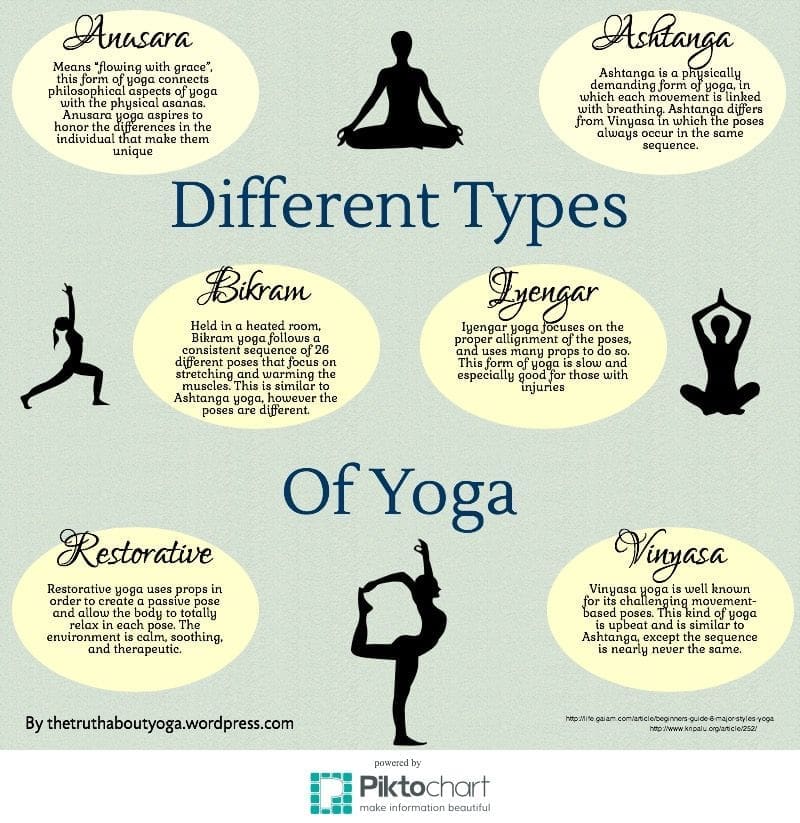
Different Types of Yoga: Your Comprehensive Guide to Wellness and Balance Explore the different types of yoga and embark on a journey of holistic wellness through this comprehensive guide. With its rich origins in ancient India, yoga provides a multifaceted approach to well-being, intertwining the physical, mental, and spiritual dimensions of life. Whether you’re a beginner or an experienced practitioner, discover the unique benefits each yoga type offers. Roll out your mat, inhale deeply, and let’s navigate through the varied and enriching world of yoga together 1. Hatha Yoga: Aligning Body and Breath At the foundation of all yoga styles, we find Hatha Yoga. This gentle practice focuses on aligning the body and breath, incorporating physical postures (asanas), breathing techniques (pranayama), and meditation. By embracing Hatha Yoga, individuals can enhance their flexibility, build strength, and experience an overall sense of well-being. 2. Vinyasa Yoga: Flowing with Breath and Movement Vinyasa Yoga is a dynamic and flowing style that synchronizes movement with breath. Through graceful transitions between poses, practitioners cultivate strength, endurance, and mindfulness. This yoga style not only improves physical fitness but also helps release mental and emotional tension, leading to increased focus and clarity. 3. Ashtanga Yoga: The Eight-Limbed Path to Discipline Ashtanga Yoga follows the eight-limbed path outlined by the sage Patanjali. This structured and rigorous practice involves a predetermined series of poses combined with synchronized breathing. By practicing Ashtanga Yoga, individuals can enhance physical strength, increase flexibility, and develop discipline and concentration. It offers a transformative journey that nurtures both the body and the mind. 4. Bikram Yoga: Heat-Induced Detoxification Bikram Yoga, also known as hot yoga, takes place in a heated room typically set to 105°F (40.6°C). The practice consists of a specific sequence of 26 postures and two breathing exercises. The heat intensifies the benefits, allowing for deeper stretching and detoxification through sweating. Bikram Yoga promotes cardiovascular health, improves circulation, and aids in weight management. 5. Kundalini Yoga: Awakening the Inner Energy Kundalini Yoga focuses on awakening the dormant spiritual energy within each individual. This practice incorporates physical postures, breathwork, chanting, and meditation to promote self-awareness and spiritual growth. Kundalini Yoga cultivates vitality, reduces stress, and enhances intuition, leading to a balanced and joyful life. 6. Restorative Yoga: Deep Relaxation and Healing Restorative Yoga is a gentle and nurturing practice that promotes deep relaxation and healing. With the support of props like bolsters, blankets, and blocks, practitioners are fully supported in each pose, allowing them to release tension and restore the body’s natural equilibrium. This style of yoga is particularly beneficial for reducing stress, improving sleep quality, and enhancing overall well-being. 7. Yin Yoga: Embracing Stillness and Surrender Yin Yoga is a slow-paced and meditative practice that targets the connective tissues, such as ligaments, tendons, and fascia. Poses are held for an extended period, typically ranging from one to five minutes, allowing for deep stretching and releasing physical and emotional blockages. Yin Yoga cultivates mindfulness, improves flexibility, and stimulates the flow of vital energy throughout the body. Types of Yoga: A Path to Wellness Practicing different types of yoga offers a multitude of benefits for your overall well-being: 1. Physical Well-being: Regular practice of yoga enhances strength, flexibility, and posture. It improves cardiovascular health, aids in weight management, and reduces the risk of chronic diseases. 2. Mental and Emotional Health: Yoga reduces stress, anxiety, and depression. It enhances focus, concentration, and mental clarity, leading to a balanced state of mind. 3. Spiritual Growth: Yoga provides a pathway to self-discovery and spiritual awakening. Through meditation and mindfulness, practitioners develop a deeper connection with their inner selves and the world around them. 4. Increased Energy and Vitality: Yoga stimulates the flow of vital energy (prana) in the body, leaving individuals feeling rejuvenated, energized, and ready to tackle life’s challenges. 5. Improved Sleep Quality: Regular practice of yoga promotes relaxation and reduces insomnia, resulting in improved sleep quality and overall well-restedness. 6. Enhanced Immune Function: Yoga supports the body’s immune system, helping to prevent illness and promote overall well-being. 7. Increased Self-Awareness: Yoga cultivates self-awareness and self-acceptance, allowing individuals to develop a positive relationship with themselves and others. Conclusion: Incorporating different types of yoga into your life can be a transformative journey towards improved physical, mental, and spiritual well-being. Whether you’re seeking strength, flexibility, relaxation, or self-discovery, the diverse world of yoga has something to offer. So, roll out your mat, breathe deeply, and let the magic of yoga guide you towards a path of wellness and self-transformation. [hfe_template id=’4070′]Hatha Yoga

Different Types of Yoga: Your Comprehensive Guide to Wellness and Balance Read More »