
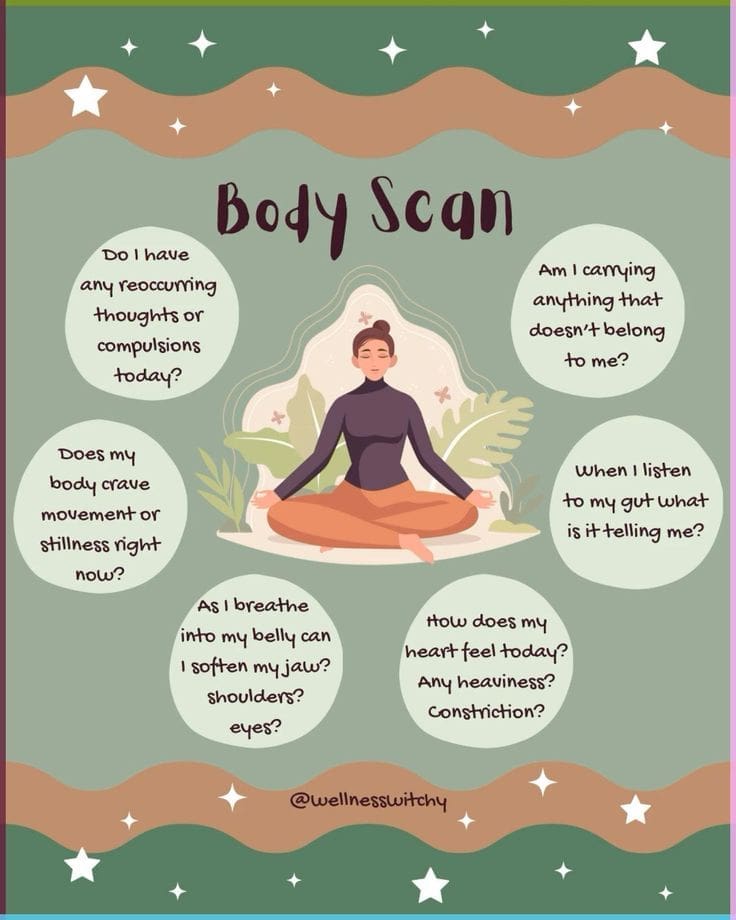
This Body Scan Meditation Guide explains a simple mindfulness technique that helps bring awareness to different parts of the body. Body scan meditation is commonly used to release tension, calm the mind, and improve relaxation. By slowly focusing attention on each area of the body, many people find it easier to notice stress and gently let it go.
Body Scan Meditation Guide: How This Technique Helps Relax the Body
The Body Scan Meditation Guide technique involves slowly bringing attention to different areas of the body, often starting from the feet and moving upward. This practice encourages people to notice sensations, tension, or discomfort without judgment. Over time, body scan meditation can help improve mindfulness, support relaxation, and create a deeper connection between the mind and body.
What is Body Scan Meditation?
Body scan meditation is a mindfulness practice that invites you to focus your attention on different parts of your body in a systematic way. By directing your awareness to these areas, you not only enhance your connection to your physical self but also encourage a state of relaxation and calmness.
This practice typically involves lying down in a comfortable position, closing your eyes, and gently guiding your focus through each part of your body, from head to toe or vice versa. It’s a wonderful way to check in with yourself and unwind after a long day.
Benefits of Body Scan Meditation
1. Increased Body Awareness
One of the main benefits of body scan meditation is that it helps you develop a heightened awareness of your body. Many people walk through life disconnected from their physical sensations. By practicing this meditation, you can learn to tune in to the signals your body sends you, such as areas of tension or discomfort. This awareness can enable you to respond proactively to these sensations.
2. Reduced Stress and Anxiety
Stress and anxiety can manifest in your body in various ways, often leading to muscle tension, headaches, or fatigue. Body scan meditation can promote deep relaxation, allowing you to release built-up stress. As you focus on each part of your body and actively try to relax it, you may find that your overall anxiety levels decrease over time.
3. Improved Sleep Quality
A soothing body scan meditation can serve as a fantastic prelude to a good night’s sleep. By calming your mind and relaxing your body, you can help prepare yourself for rest. People who regularly practice this technique often report better sleep quality, falling asleep faster and waking up feeling more refreshed.
4. Enhanced Mindfulness
Engaging in body scan meditation encourages you to live in the present moment. It teaches you to observe your thoughts and feelings without judgment, allowing you to develop a mindful attitude towards life’s challenges. This heightened mindfulness can carry over into your daily activities, leading to improved focus and attention.
5. Pain Management
For those experiencing chronic pain, body scan meditation can be a helpful tool for managing discomfort. By bringing awareness to areas of pain, you can learn to acknowledge and accept those sensations without becoming overwhelmed. This mindfulness can empower you to cope with pain more effectively.
How to Prepare for Body Scan Meditation
Before you begin your body scan meditation journey, it’s essential to prepare yourself adequately. Here are a few suggestions to create an ideal environment for your practice:
Choose a Comfortable Setting
Select a quiet, comfortable space where you won’t be interrupted. You may want to dim the lights or light a candle to create a calming atmosphere. Ensure that you have a soft surface, such as a yoga mat or a bed, where you can lie down comfortably.
Dress Comfortably
Wearing loose, breathable clothing can help you feel at ease during your meditation. Make sure you’re not too hot or cold, as temperature discomfort can distract you from your practice.
Set Aside Time
To get the most out of your body scan meditation, give yourself at least 15 to 30 minutes. This will allow you to fully relax and immerse yourself in the experience.
Steps to Practice Body Scan Meditation
Now that you’re prepared, let’s walk through the steps to practice body scan meditation.
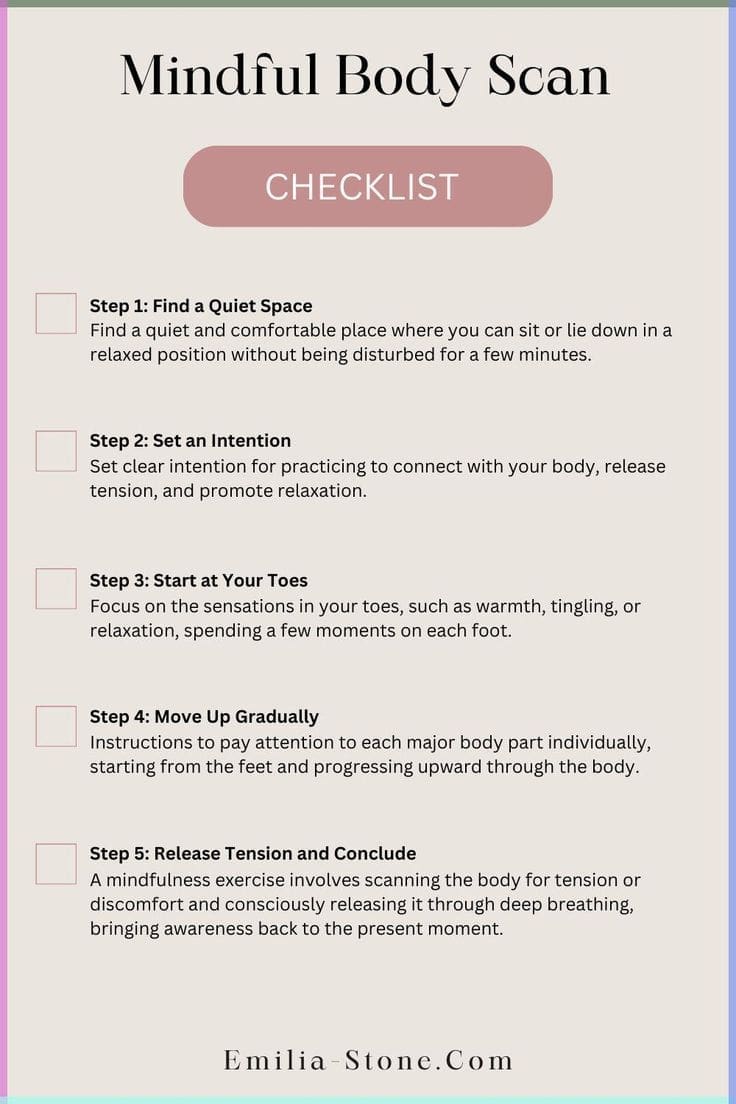
Step 1: Get Comfortable
Lie down flat on your back with your arms at your sides, palms facing up. Close your eyes gently, and take a few deep breaths. Inhale slowly through your nose, allowing your belly to rise, then exhale gently through your mouth. Feel the tension begin to melt away from your body with each breath.
Step 2: Set an Intention
Before you begin the scan, it may be helpful to set an intention for your meditation. This could be a simple word like “relax” or a desire to release tension or cultivate gratitude. Holding this intention in your mind can enhance your practice.
Step 3: Focus on Your Breath
Take a moment to bring your attention to your breath. Notice the sensation of the air entering and leaving your body. As thoughts arise, acknowledge them without judgment, and gently redirect your focus back to your breathing.
Step 4: Start the Body Scan
Begin at the top of your head and gradually work your way down to your toes. Here’s a breakdown of how to navigate through each body part:
| Body Part | What to Focus On |
|---|---|
| Head | Notice sensations, tension, or relaxation. Let your forehead soften. |
| Eyes | Release any tightness; feel your eyelids relax. |
| Jaw | Allow your jaw to drop slightly; notice the difference. |
| Neck | Feel the weight of your head and the lengthening of your neck. |
| Shoulders | Release any tension; let your shoulders melt away from your ears. |
| Arms | Focus on your arms and hands; feel them heavy and rested. |
| Chest | Notice the rise and fall of your breath; let it fill your chest. |
| Abdomen | Feel your belly expand with your breath; relax any tightness. |
| Lower Back | Be aware of any pressure; breathe into this area to encourage relaxation. |
| Legs | Acknowledge the weight and touch of your legs against the surface. |
| Feet | Notice any sensations in your feet; allow them to relax completely. |
Take your time moving through each body part. You can spend a few moments focusing on each area, or you can move quickly if that feels more comfortable for you.
Step 5: Return to Your Breath
Once you’ve scanned your entire body, bring your attention back to your breath. Notice how your body feels now compared to the beginning of the meditation. Has your tension decreased? Do you feel lighter?
Step 6: Gently Transition Back
When you’re ready to end your practice, take a few deep breaths and slowly begin to wiggle your fingers and toes. Gently open your eyes and take a moment to adjust to your surroundings.
Step 7: Reflect on Your Experience
Before moving on with your day, take a moment to reflect. How do you feel emotionally and physically? Has anything shifted? Recognizing these changes can help reinforce the benefits of the meditation.
Tips for Enhancing Body Scan Meditation
Regular Practice
Consistency is key to reaping the benefits of body scan meditation. Aim to practice daily or several times a week to develop this habit. Start with 10 to 15 minutes and gradually extend your sessions as you become more comfortable.
Guided Meditations
If you’re new to this practice or prefer some guidance, consider using recorded body scan meditations. There are plenty of apps and websites that offer free resources led by experienced instructors. Their soothing voices can be an excellent aid in navigating your practice.
Incorporate It Into Daily Life
You don’t need to limit body scan meditation to your dedicated sessions. You can do a mini body scan during times of stress or when you feel tension build up throughout the day. Take a few deep breaths, and mentally check in with your body.
Create a Ritual
To deepen the experience, create a ritual around your body scan meditation. Consider lighting a candle, using essential oils, or playing calming music to enhance your focus and relaxation.
Common Challenges and How to Overcome Them
Racing Thoughts
It’s entirely natural for your mind to wander during meditation, especially in the beginning. When you notice your thoughts drifting, gently redirect your focus back to your breath or the body part you are concentrating on. Over time, you may find it easier to maintain your focus.
Discomfort or Tension
If you feel discomfort while lying down, try adjusting your position to find what feels best for you. You can also practice sitting in a chair if that’s more comfortable. It’s essential to listen to your body and honor its needs.
Feeling Restless
If you find it challenging to focus due to feelings of restlessness, remind yourself that it’s okay. Allow these sensations to be present without judgment, and gently guide your awareness back to your body.
Conclusion
Body scan meditation is a powerful tool for enhancing your awareness, reducing stress, and fostering a deeper connection with your body. By incorporating this practice into your daily routine, you can cultivate mindfulness and better manage the challenges life throws your way. Remember, there’s no right or wrong way to do body scan meditation; it’s entirely about what feels best for you. So take a deep breath, get comfortable, and give it a try! You just might find it to be a valuable addition to your wellness journey.
[hfe_template id=’4070′]