
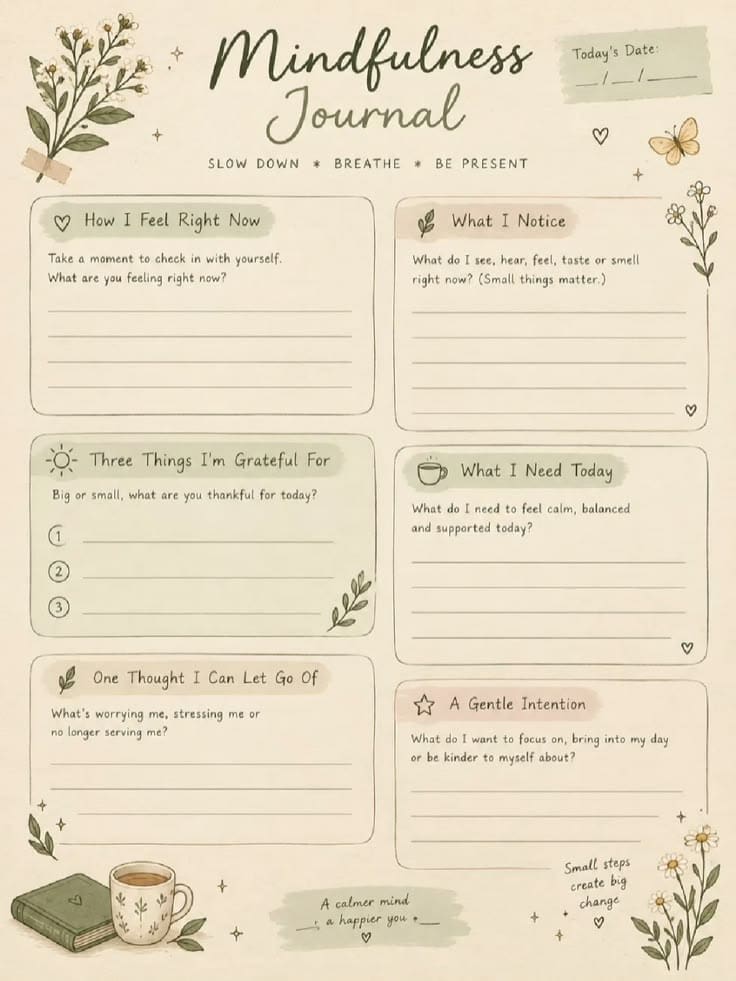
Mindfulness journaling is a simple practice that combines mindful awareness with writing to help you slow down, reflect on your thoughts and focus on the present moment. With regular practice, it can become a useful tool for self-awareness, stress management and emotional wellbeing.
Benefits of Mindfulness Journaling
The benefits of mindfulness journaling can include greater self-awareness, improved emotional clarity and a better understanding of everyday thoughts and feelings. Taking a few minutes to write mindfully can help you pause, notice what is happening in the present moment and develop a more thoughtful approach to daily experiences.
Understanding Mindfulness
Mindfulness is the practice of staying present and fully engaging with the moment without judgment. It involves observing your thoughts, feelings, and surroundings consciously. Practicing mindfulness helps reduce stress and anxiety and improves overall mental health.
Benefits of Mindfulness
Many people find that being mindful allows them to reconnect with their true selves. Here are some key benefits you might appreciate:
| Benefit | Description |
|---|---|
| Reduced Stress | Mindfulness helps you let go of anxiety and worry. |
| Enhanced Focus | It trains your brain to concentrate on the present. |
| Emotional Regulation | You become more aware of your feelings and how to manage them. |
| Healthier Relationships | Mindfulness improves your interactions with others. |
Each of these benefits contributes to a more fulfilled and balanced life. Wouldn’t it be great to incorporate these benefits into your daily routine?
The Concept of Journaling
Journaling is a personal practice that involves writing down thoughts, feelings, and experiences. It serves as a tool for self-reflection and expression, allowing you to track your progress and feelings over time.
Types of Journals
When it comes to journaling, there are various styles you can adopt based on your preferences:
| Type of Journal | Description |
|---|---|
| Gratitude Journal | A place to express appreciation for the positive things in your life. |
| Dream Journal | Record your dreams to uncover hidden insights and patterns in your subconscious. |
| Bullet Journal | An organized system combining tasks, thoughts, and events creatively. |
| Mindfulness Journal | Focused on being present, exploring thoughts and feelings in real-time. |
Choosing the right type of journal is crucial for your mindfulness journey. Which one resonates with you the most?
Combining Mindfulness and Journaling
Mindfulness journaling merges the practices of mindfulness and the benefits of journaling, creating a powerful tool for self-discovery. Here’s how you can get started with it.
Setting Up Your Mindfulness Journal
- Choose Your Medium: You can opt for a digital format or a traditional notebook. The choice should be influenced by what feels comfortable to you.
- Create a Calm Environment: Find a quiet place where you can write without distractions. This will help you to settle into a state of mindfulness.
- Set a Regular Time: Consistency is key. Choose a specific time to dedicate to your mindfulness journaling, whether it’s in the morning or evening.
Mindfulness Journal Prompts
Starting can sometimes be tricky. Here are some prompts to help you get the words flowing:
- What emotions am I feeling right now?
- What thoughts are occupying my mind?
- What can I hear, see, touch, or smell around me?
- What am I grateful for today?
These prompts encourage you to connect deeply with your current emotional state and surroundings. What might you discover about yourself when you use these prompts?
Techniques for Mindfulness Journaling
Incorporating different techniques into your mindfulness journaling practice can enhance your experience. Here are some you might consider:
Free Writing
Free writing allows you to express your thoughts freely without worrying about grammar or structure. Set a timer for ten minutes and write whatever comes to mind without hesitation.
Stream of Consciousness
Similar to free writing, this technique encourages you to jot down your thoughts as they come. This can offer surprising insights as you capture your unfiltered mind.
Mindful Reflection
Set aside time to reflect on past entries. Look for patterns in your emotions and thoughts. You might notice recurring themes or issues that you wish to address.
Visualization
Use your journal to visualize your goals and dreams. Describe your ideal day and how you would feel in that moment. This exercise can promote a sense of hope and motivation.
Focused Breathing
Before you start writing, take a few moments to practice focused breathing. Inhale deeply, hold for a few seconds, then exhale slowly. This can help clear your mind and prepare you for mindful writing.
The Emotional Benefits of Mindfulness Journaling
Practicing mindfulness journaling can lead to significant emotional growth. Let’s explore how this practice can impact your emotional health.
Increased Self-Awareness
As you write, you begin to better understand your emotional responses and triggers. Recognizing these can help you navigate your feelings more effectively.
Enhanced Emotional Intelligence
Through mindfulness journaling, you cultivate awareness not only of your emotions but also of those around you. This can improve your relationships and empathy toward others.
Coping with Anxiety
Writing about your anxiety can help you acknowledge it, reducing its power over you. By exploring what triggers your anxiety, you can develop coping strategies.
Fostering Resilience
Mindfulness journaling can empower you to bounce back from setbacks. Reflecting on challenges in your journal allows you to reframe experiences positively.
Journaling as a Therapeutic Tool
While mindfulness journaling is beneficial on its own, it can be a powerful complement to therapy.
Enhancing Therapy Sessions
If you’re working with a therapist, sharing your journal entries can provide valuable insights into your feelings and thoughts. This can lead to deeper conversations and discoveries during your sessions.
Homework Assignment
Your therapist may recommend writing exercises as homework. This not only reinforces what you’ve learned in therapy but also aligns with your mindfulness journaling practice.
Self-Discovery
Through journaling, you can uncover issues you might not realize were affecting you. This self-discovery can lead to meaningful change in your life.
Building a Long-Term Mindfulness Journaling Habit
Creating a habit around mindfulness journaling can yield lasting benefits. Here are some tips to help you build a sustainable practice.
Start Small
Begin with just a few minutes each day. Over time, you can gradually increase the duration as you become more comfortable with the practice.
Stay Consistent
Try to journal at the same time every day. Consistency can help turn journaling into a regular part of your personal routine.
Make It Enjoyable
Customize your journal according to your tastes. You might decorate the pages, use colorful pens, or write in your favorite writing spot to enhance the experience.
Reflect on Progress
Take time to revisit past entries and recognize how far you’ve come. Celebrating small wins can motivate you to continue your journaling journey.
Incorporating Mindfulness Activities Beyond Journaling
Expanding your mindfulness practice beyond journaling can enrich your overall experience. Here are some activities to consider:
Meditation
Practicing mindfulness through meditation can complement your journaling sessions. Spend some time meditating before or after writing to enhance your presence.
Mindful Walking
Take a stroll while focusing on your surroundings. Notice the sensations underfoot, the sounds in the air, and the sights alongside the path. Afterward, write about your experience in your journal.
Breathing Exercises
Incorporate breathing exercises into your mindfulness routine. Spend a few minutes focusing solely on your breath, then write about the feelings that arise before or after.
Creative Expression
Explore your thoughts through art, music, or any other creative outlet. Engaging in these activities can stimulate new insights or ideas to write about in your journal.
Common Challenges in Mindfulness Journaling and How to Overcome Them
Like any new practice, mindfulness journaling can present challenges. Here are some common roadblocks and tips for overcoming them.
Writer’s Block
If you find yourself staring at a blank page, don’t worry! Instead of forcing words, revisit past entries or use a prompt to spark your creativity.
Lack of Time
If life gets busy, aim for shorter journaling sessions instead of feeling pressured to write a lot. A few sentences about your day or feelings can still be meaningful.
Self-Doubt
You might find yourself questioning the value of your writing. Remember, your journal is a private space for growth. There’s no right or wrong way to journal.
Emotional Overwhelm
Sometimes, writing can bring difficult emotions to the surface. If this happens, take a break, practice self-compassion, and approach the subject when you feel ready.
Embracing the Mindfulness Journaling Journey
As you embark on your mindfulness journaling practice, keep in mind that it’s a journey. Each entry is an opportunity to learn more about yourself and grow in your understanding of your emotions.
Being gentle with yourself as you navigate this path is essential. There will be good days and challenging days, and both are equally important in your process.
Celebrate Your Growth
Recognizing your progress is vital, whether it’s through more significant self-awareness, better emotional regulation, or simply the habit of journaling itself. Don’t forget to acknowledge the effort you put into this self-discovery process.
Find Community
If you feel inclined, seek out communities—online or in-person—focused on mindfulness or journaling. Sharing your experiences and insights with others can further enrich your journey.
Keep Learning
Mindfulness and journaling are lifelong journeys. Continue seeking out new resources or techniques that resonate with you. Whether reading books, attending workshops, or watching videos, there’s always something new to discover.
Incorporating these practices into your daily routine can lead to profound transformations in your well-being and self-awareness. It’s a privilege to get to know yourself better through mindfulness journaling, and every word you write adds to your narrative. Embrace the journey, and see where your pen leads you!